Chapter 1: Arriving in Cairo, Staying in Giza – Big Beige Buildings
Cairo is busy, beige, and brown. Everything covered in a thick layer of dust and sand and the air has a filtered quality which I asked Callum about— “pollution” he answered simply. Ah, that explains it. It was sort of dreamy and soft, but that might have been my vision from the delirium of nearly 30 hours straight of travel.
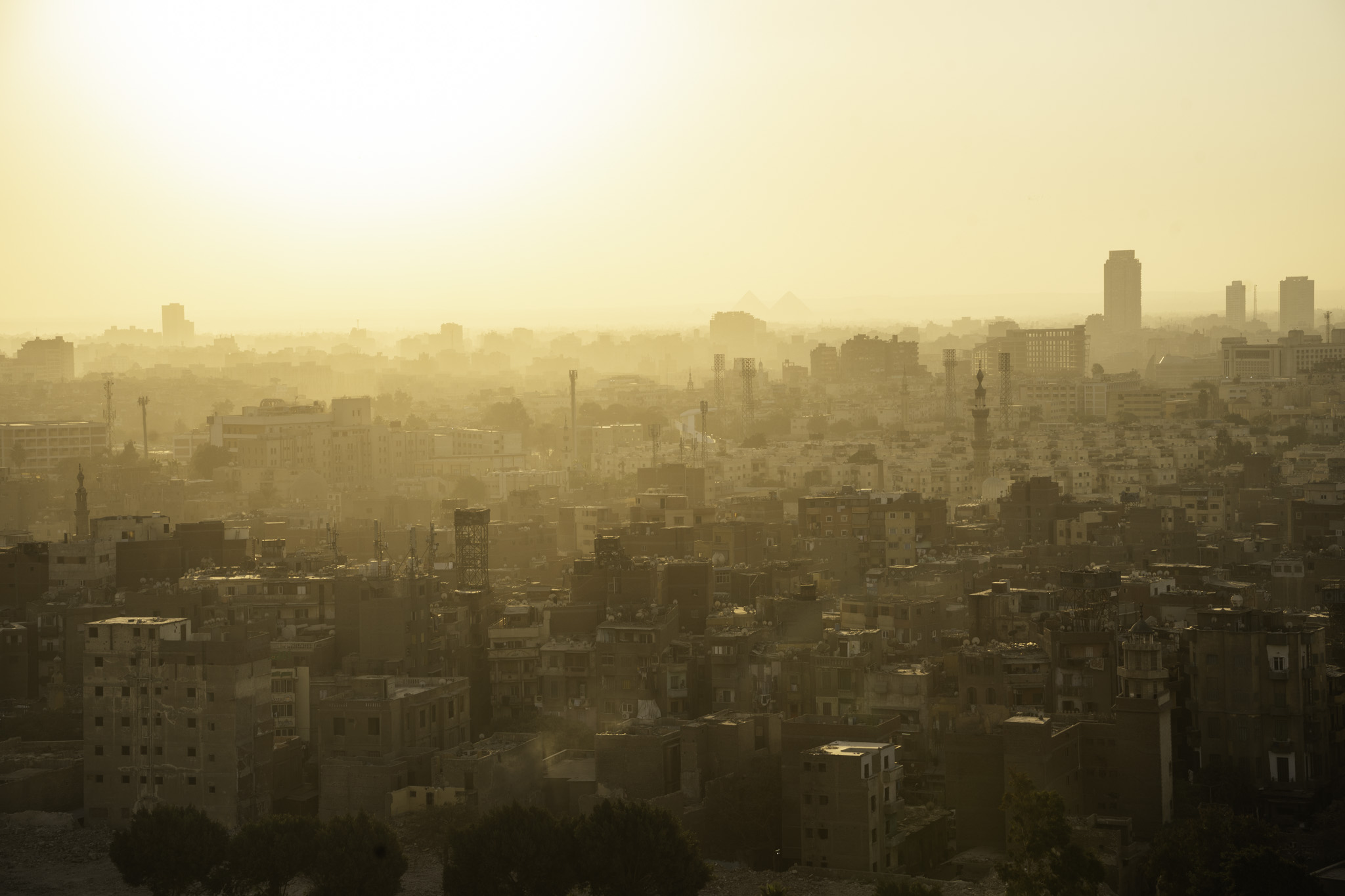
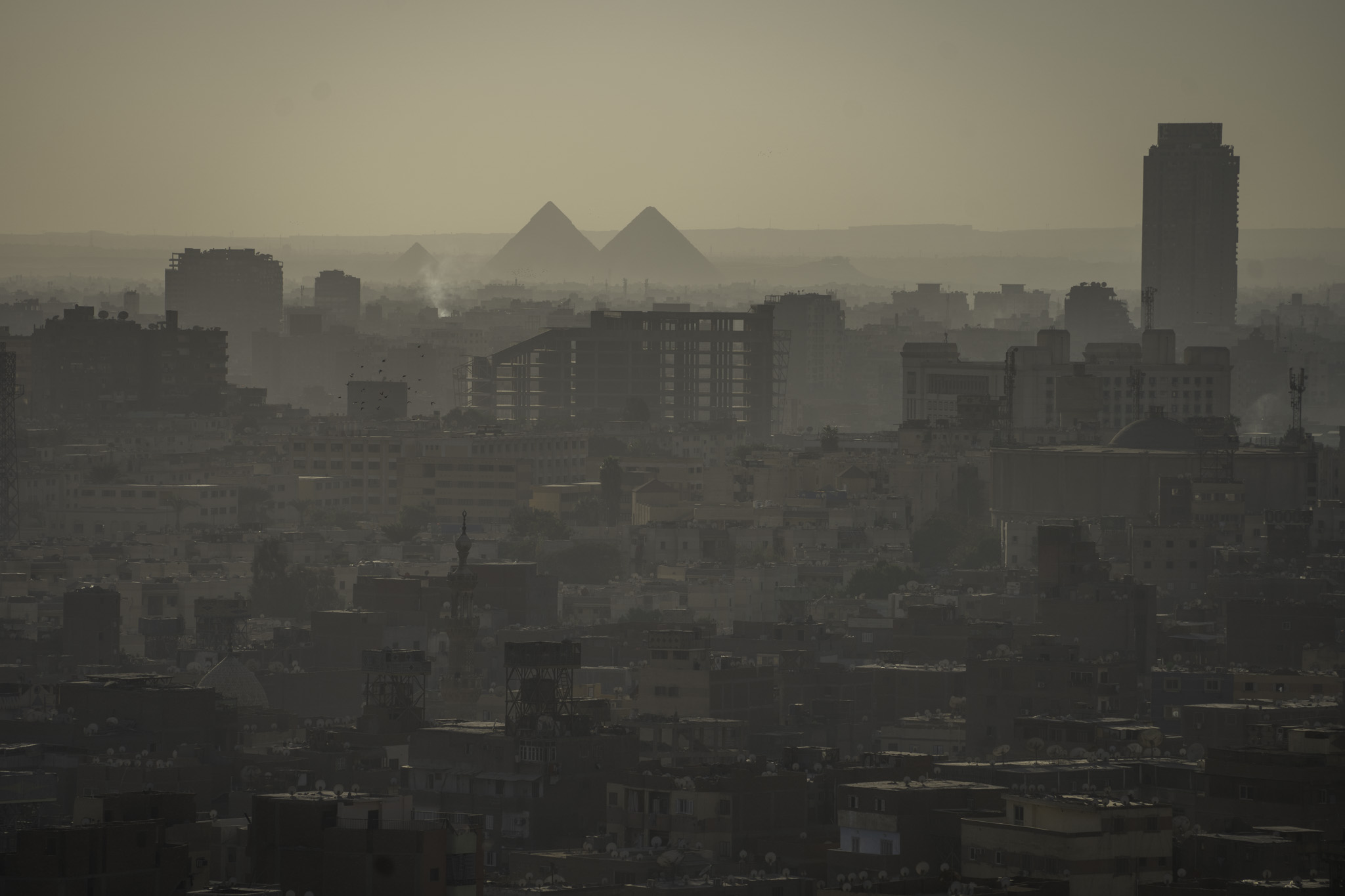
In our cab, we weaved through the streets among tall, identical buildings, each sporting air conditioning units, satellite dishes, and drying laundry, offering the only bright differences in colour. These abodes were interspersed with large mosques and minarets, also dusty and sandy coloured, though some were painted olive or grey. The roads were lawless—cars winding in and out of traffic, using the lane markers as mere suggestions. People walking through and around cars as if it was a normal pedestrian road instead of a highway. Others stood in the middle of the highway with brooms and bags—the cleaners of this highway, apparently. I was starting to feel a wave of culture shock.
I don’t know why such delusions were playing in my mind, but I thought to myself that we were going through the rough part and soon we would arrive at the nice part. An hour later, we were now in Giza, and appearances had not improved, though I was excited to spot pyramids while driving. Again, I thought that we’d soon ‘turn a corner’ and be on a nicer, tree-lined street with big shiny hotels. This did not occur. We stopped outside of a dirty building next to a dirty building next to many more dirty buildings, and it was announced we were there. Suddenly, my car door flew open and a young man wearing a tan tracksuit with a cross-body bag was greeting me, calling me sir. Seeing my stricken face, he left the door ajar and approached Callum’s side, continuing his greetings to him, a man. This was the second time in only mere hours of being dismissed as a woman. The first was at the airport going through customs. I handed the officer our passports and he shooed me away like a pesky fly to speak with the man.
Youssef, the owner of our hotel greeted us and soon there was discussion amongst the men about the cost of the ride and how to pay when we did not have Egyptian Pounds yet. We had some American dollars, and it was all sorted out, though Callum wasn’t entirely pleased with the result. I, being a woman, had nothing to do with it, so I was not bothered.
Our bags were taken away, somewhat to my consternation, and we were ushered into a teeny tiny elevator with a manual push-out door, the thick layers of cement flooring our only view as we travelled up 7 stories. Youssef proudly welcomed us to his ‘hotel’ which was a series of four rooms on a floor with more doors leading to what I assume were other people’s apartments. He led us to our room, which from the pictures looked impressive and modern. We entered a small room which did indeed feature a jacuzzi (a useless ornament with a lack of water pressure) and a large wall of dirty windows looking out onto the pyramids.
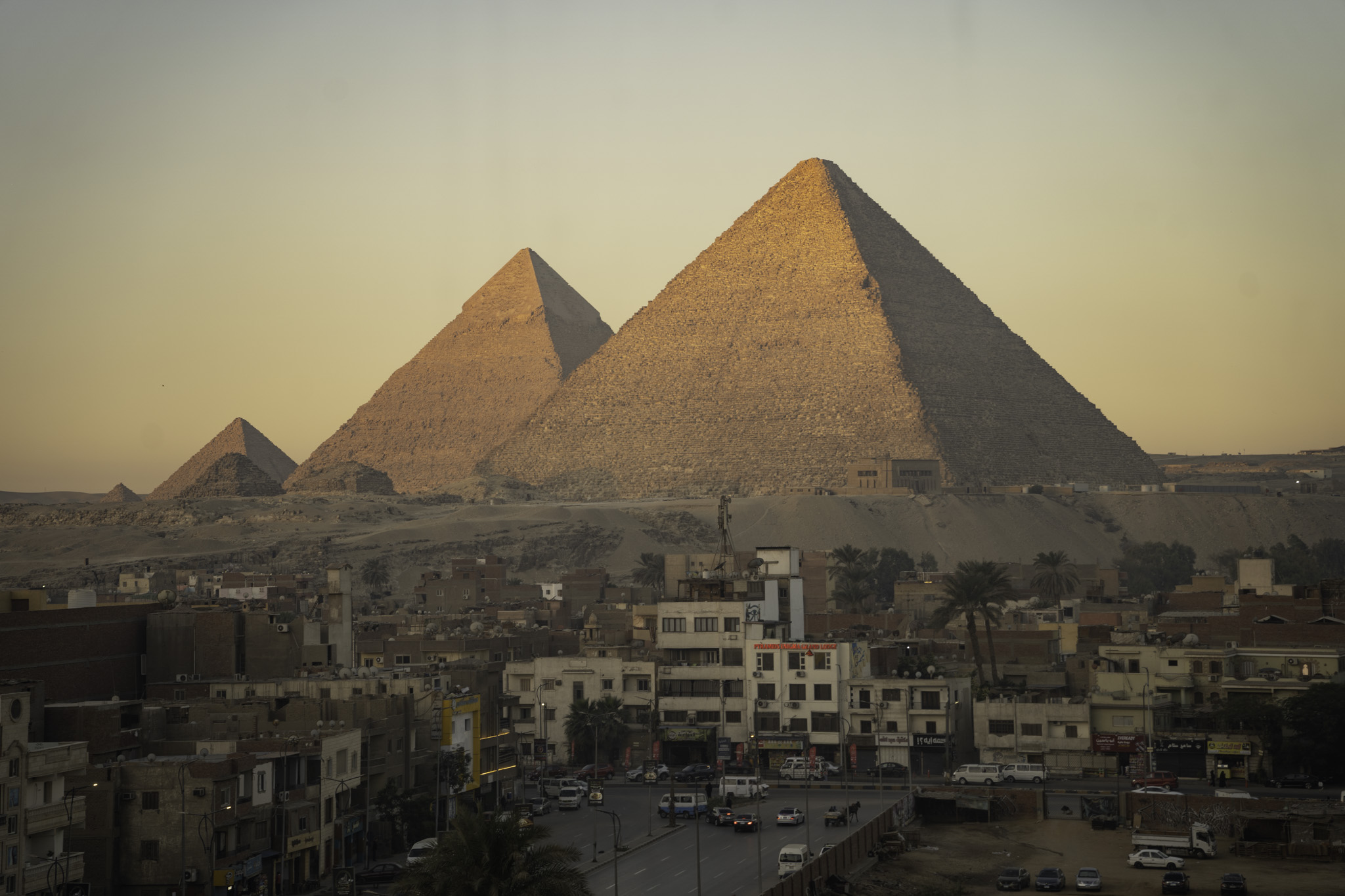
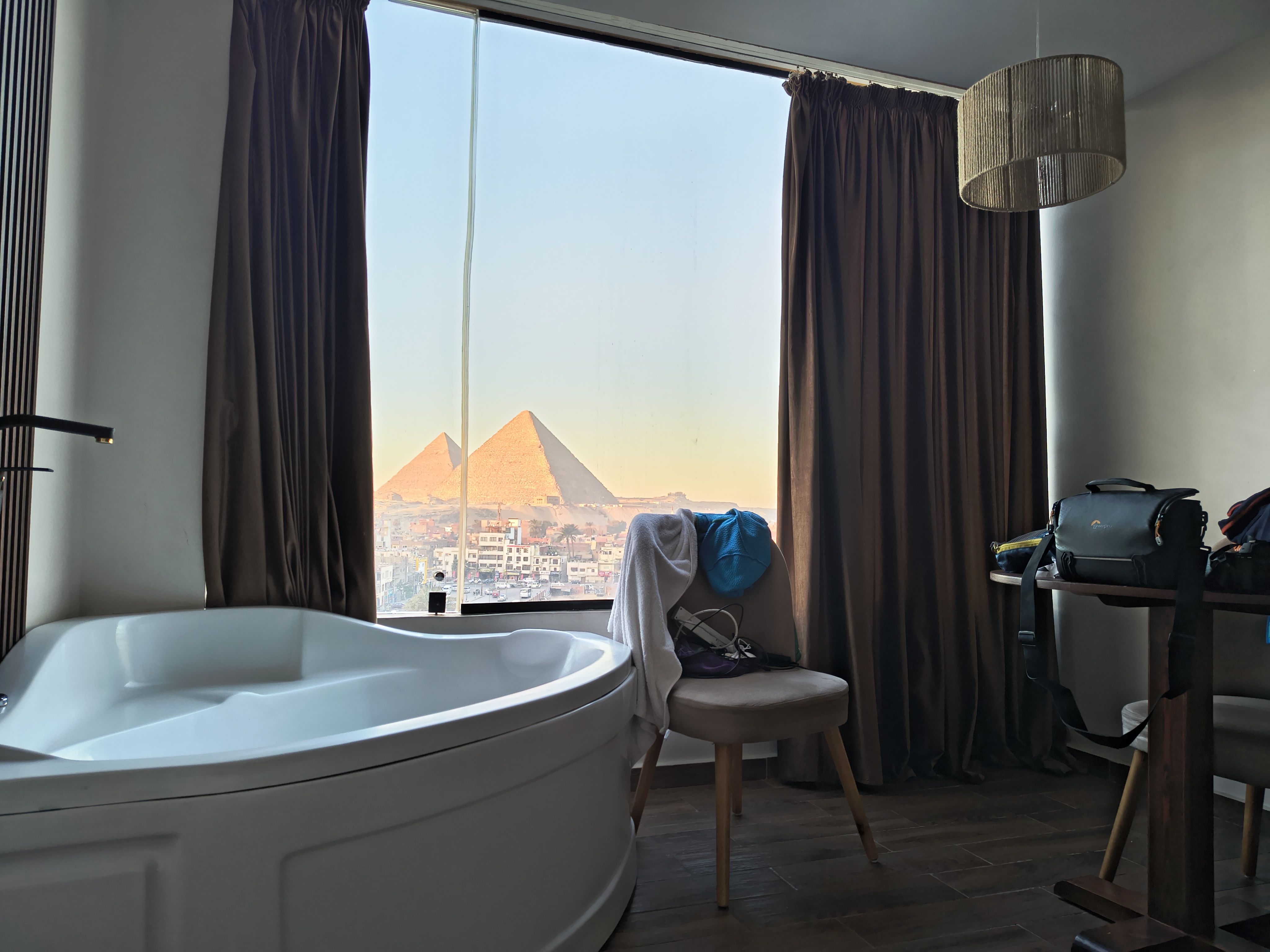
The view was impressive. The room was not. We thanked him. He wanted to show us his ‘other hotel’ which, on the same floor, was a differently named business, also sporting about four rooms and a dining room. He apparently had a third hotel on another floor. He was immensely proud of his establishments and Callum and I quickly realized that our praise and approval would be our currency with this young man. We offered our compliments and smiles so we could have our room to ourselves. The first episode of Shitt’s Creek comes to mind.
I suddenly felt an urge to cry. Yes, we had a great view. But there was dirt in the room, hairs in the bed, the bathroom was dingy, the mattress much firmer than hoped. There was evidence of effort: a glass wardrobe to hang a few items, the monogramed soap bottles—albeit with spelling mistakes…the hotel was called “________ View” but ‘View’ was spelled ‘V-E-I-W.’
I expressed a feeling of unease. We decided to freshen up a bit and go find lunch nearby, at an Italian restaurant, which is my comfort food. Then we would search for an ATM, buy some water, and return to our place. It was chillier outside than we were used to, having come from Bali which was very humid. We bundled up and made our way downstairs, down the seven stories since the elevator was busy. We dizzily entered the street and managed to cross it Egyptian-style, dodging cars like a video game.
Besides two other people, we were the only patrons of the restaurant. The other couple, an Egyptian woman in a rose headscarf and her male companion in a leather jacket sat in deep conversation, their strawberry daiquiris full and untouched the entire hour we were there. I quietly suggested to Callum they were paid actors to make us feel more at ease. Maybe the drinks were fake which is why they remained un-sipped.
The so-called Italian restaurant was expensive and not good. I ordered what I thought was lemonade and I received a bright green cocktail in a slanted glass and plastic straw. I took four or five sips and felt immediately intoxicated. The pizza was a 4 out of 10. We ate quickly, paid, and left.
The streets were grimy, and everyone stared at us. I covered my head with my pashmina and instantly felt a bit better. We found an ATM, a shop to buy some water and shampoo, and quickly retreated to our hotel. We watched a Netflix show and had a nap, trying to feel normal again.
It was much later in the day when we awoke and debated whether to keep sleeping through the night or go find something to eat. It was about 830pm, so it was entirely possible to go either way. I felt peckish and didn’t want to be wide awake at 3am starving. We sleepily bundled up and made our way through the unfamiliar neighborhood until we found a place Callum had researched. It was a bit easier this time to walk around. Under the cover of darkness and my jacket hood, I felt protected.
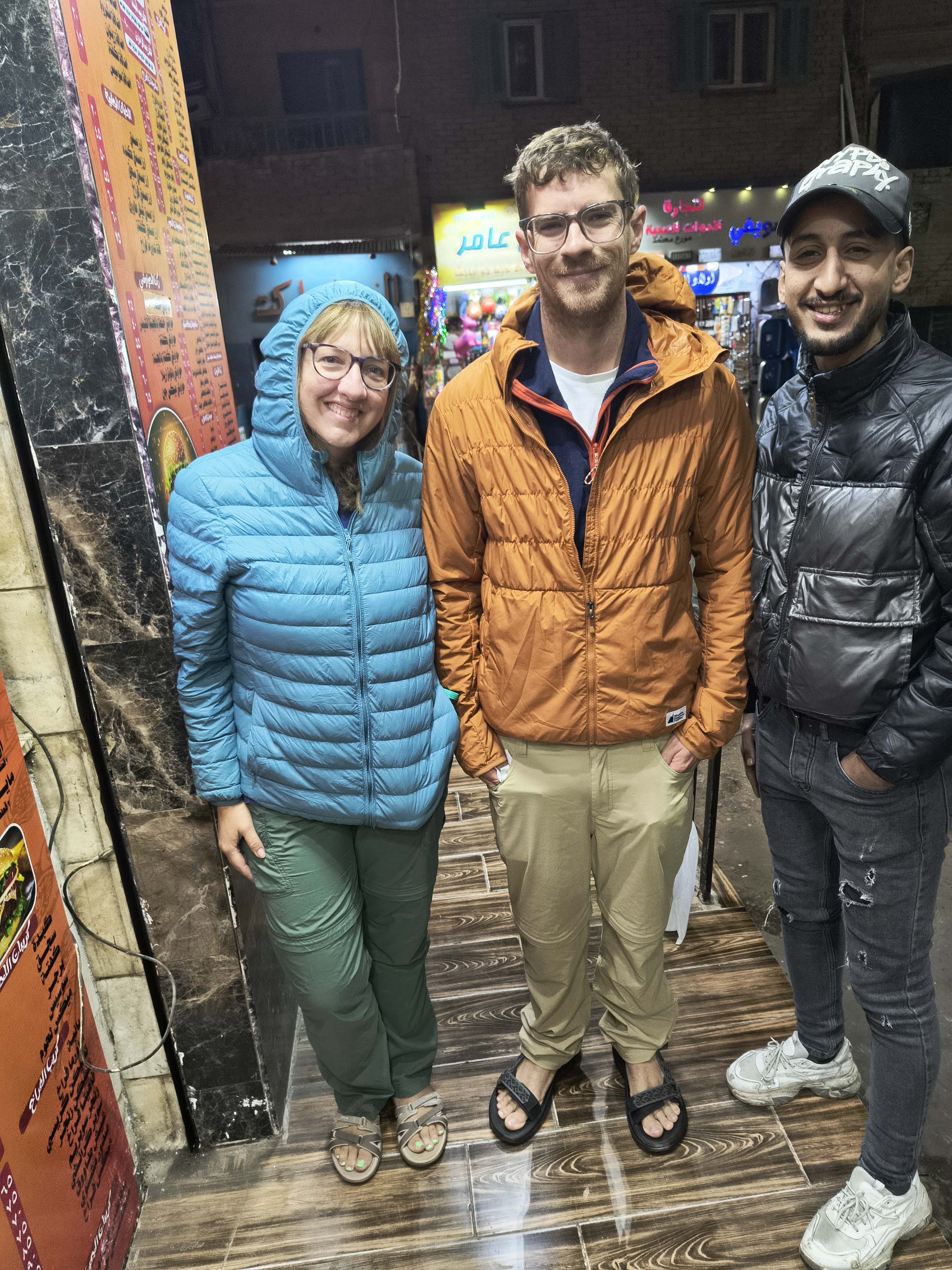
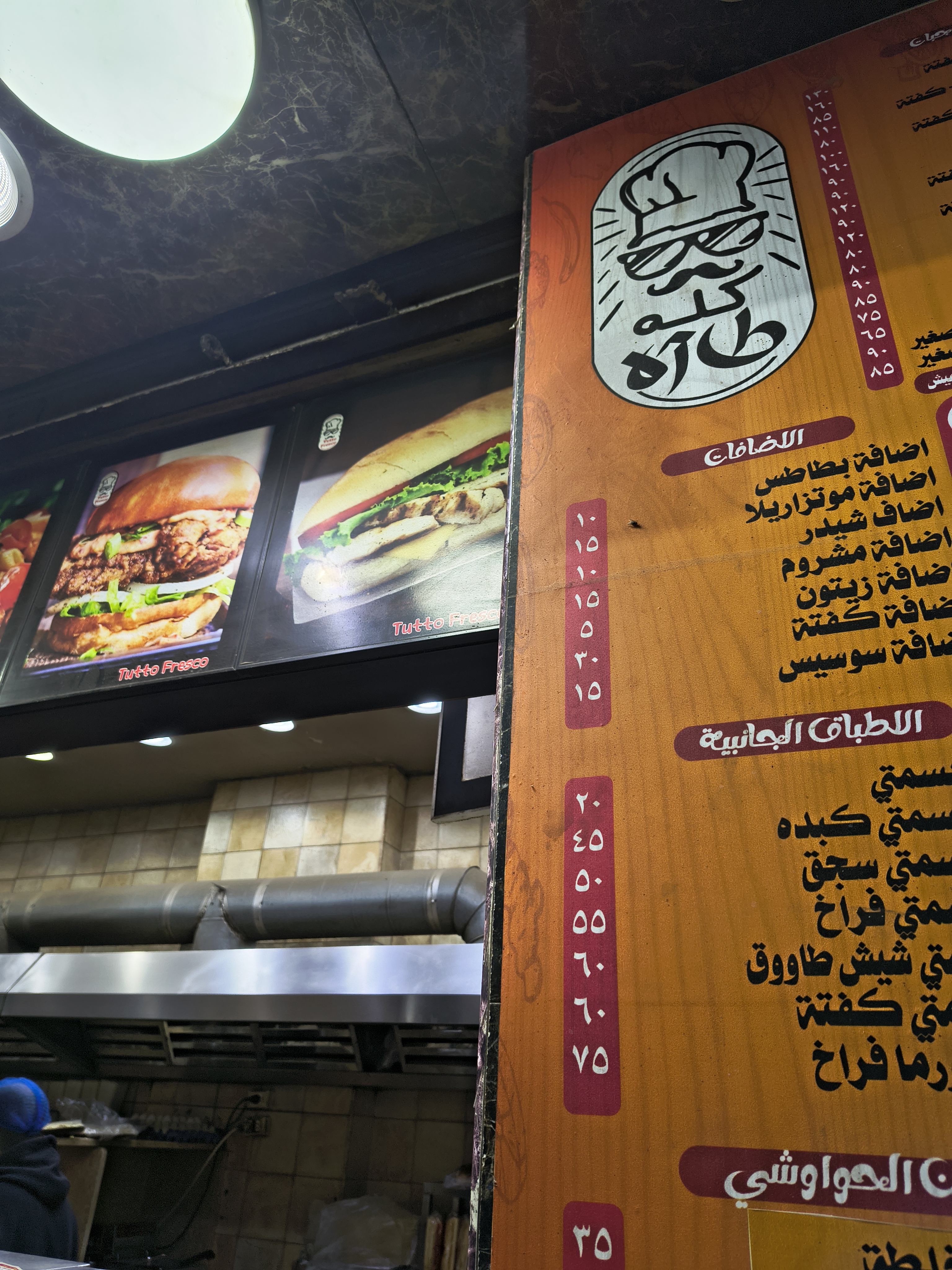
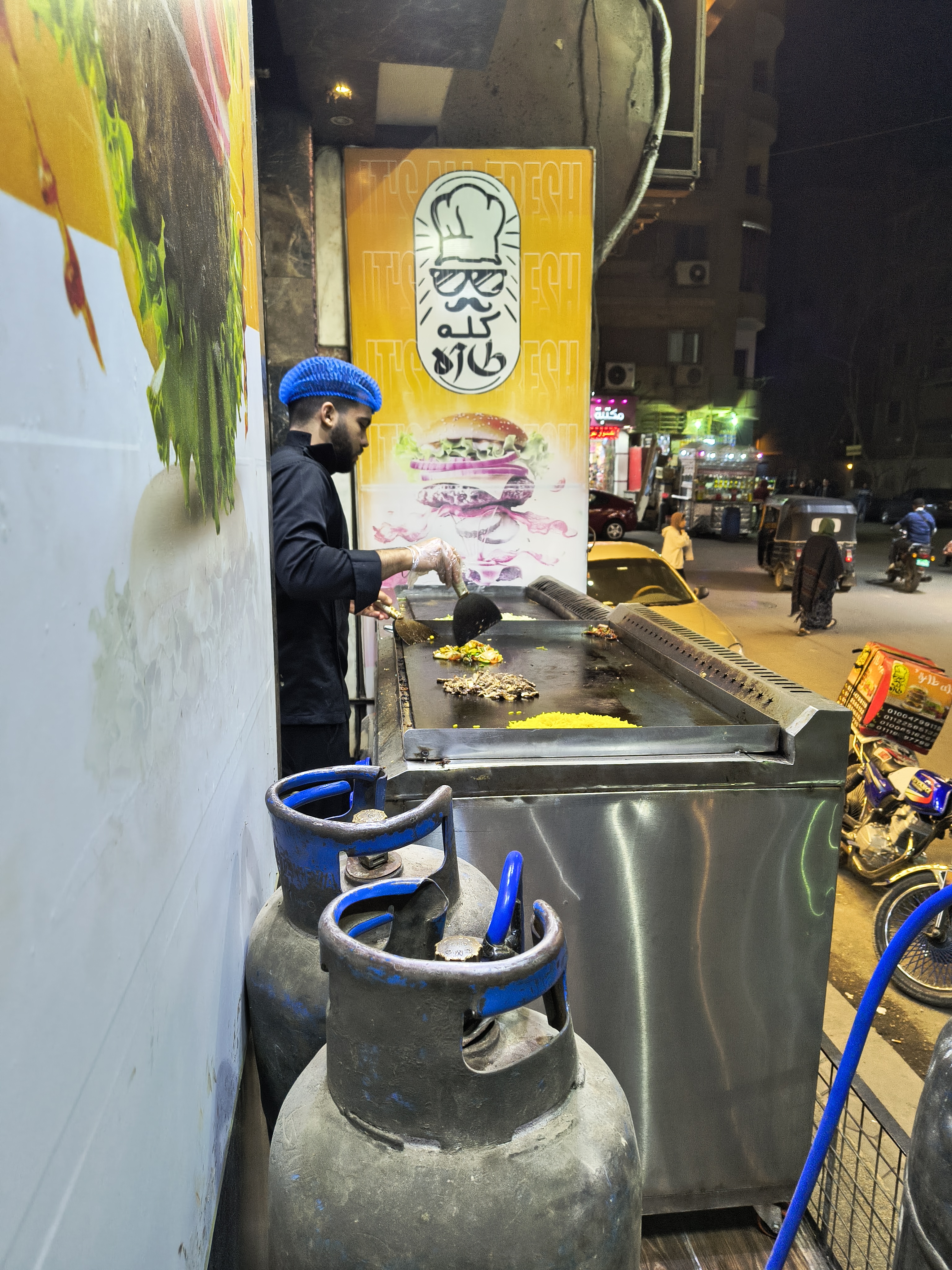
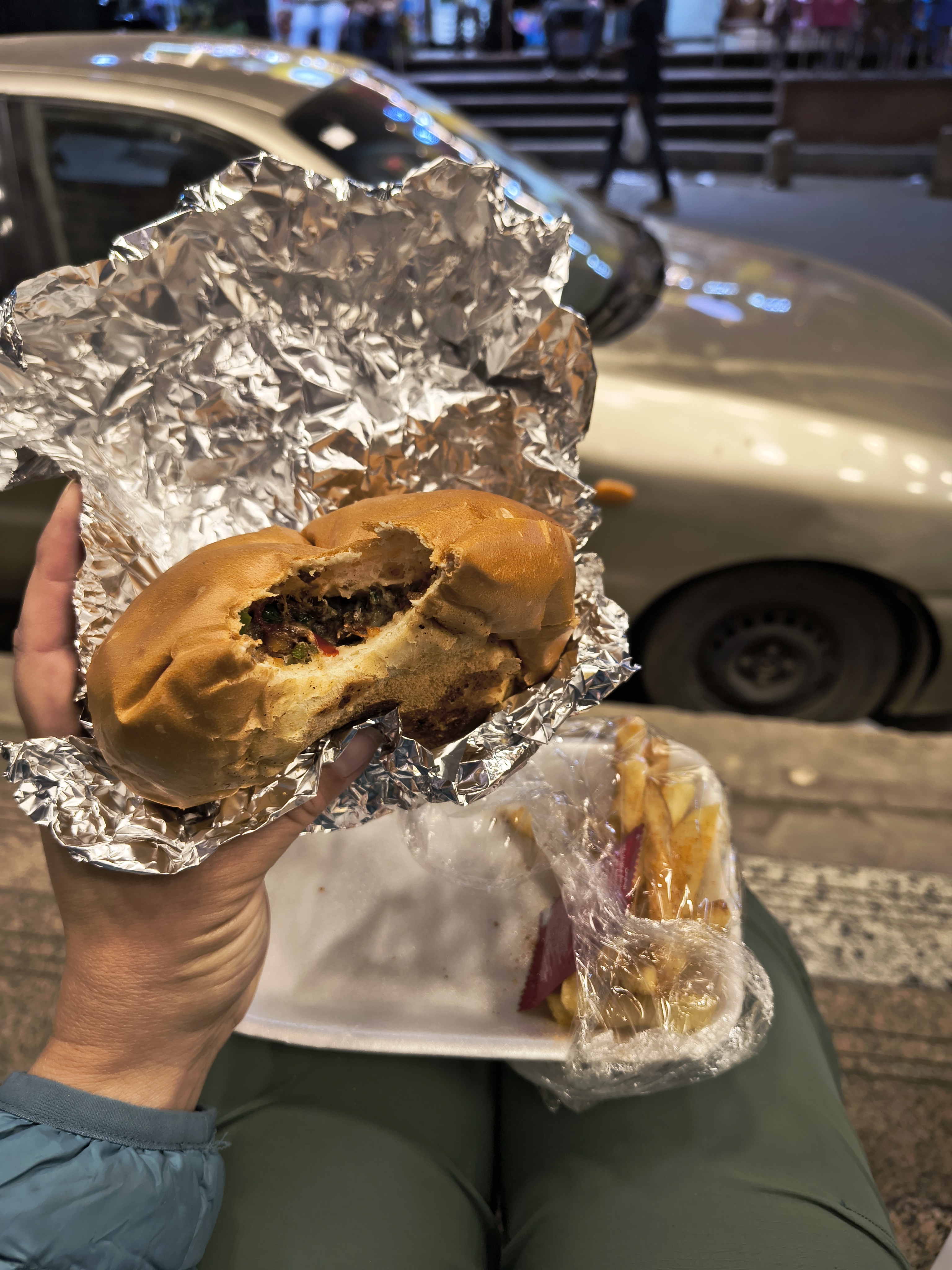
We found a fast-food sort of place with Arabic writing everywhere. I used my Google Translate tool to take a picture of the menu, which then translated the words into English. That was useful! Joseph, a young man who worked at the restaurant also helped us to order beef shawarmas. We got our food and ate on a step overlooking the street, eating the warm delicious bun, meat and vegetable concoction and people-watched. Oh yeah, this is travelling. We immerse ourselves, we eat local, we talk to locals, we observe. It’s been a while since being in such a different place to Australia. In Giza, it felt like we were the only foreigners around. It was this isolation that gave me the uneasy feeling that I was working to overcome. I reminded myself that these were human beings just like me. They are living their lives, loving each other, eating food, finding moments of joy, just like me. This is not another planet where everything is different. We are all the same.
Chapter 2: Seeing the Sights/Sites
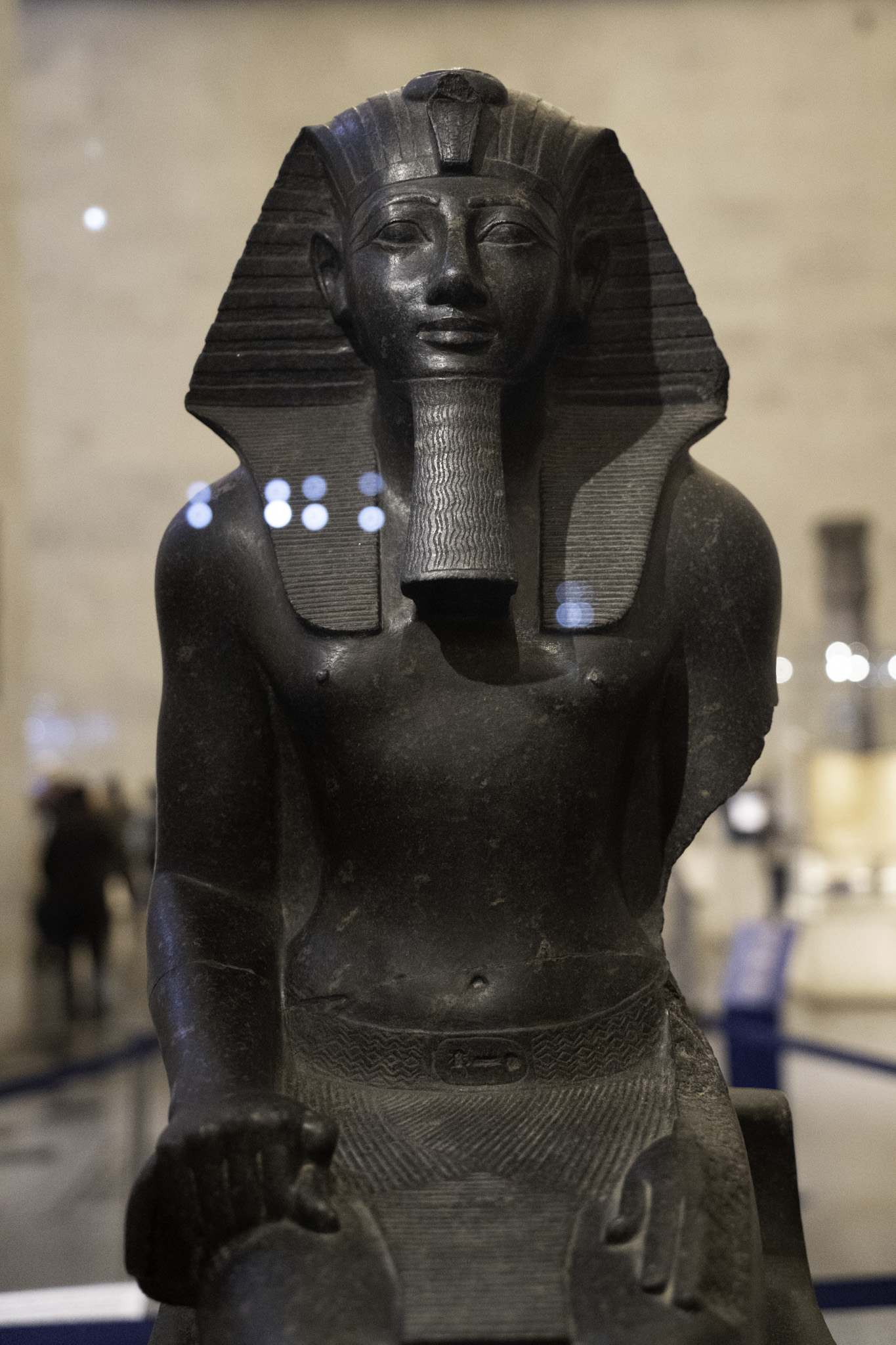
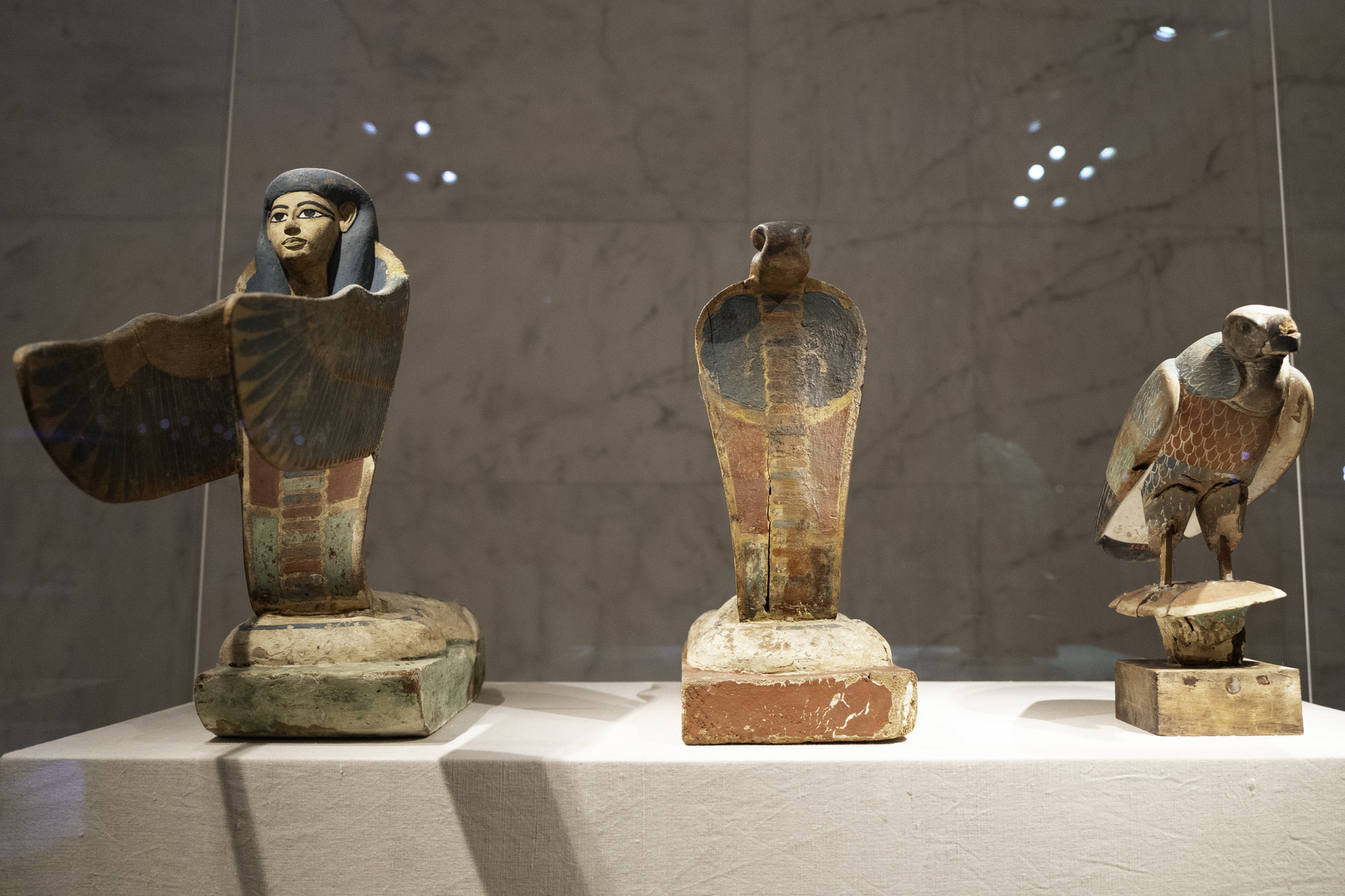
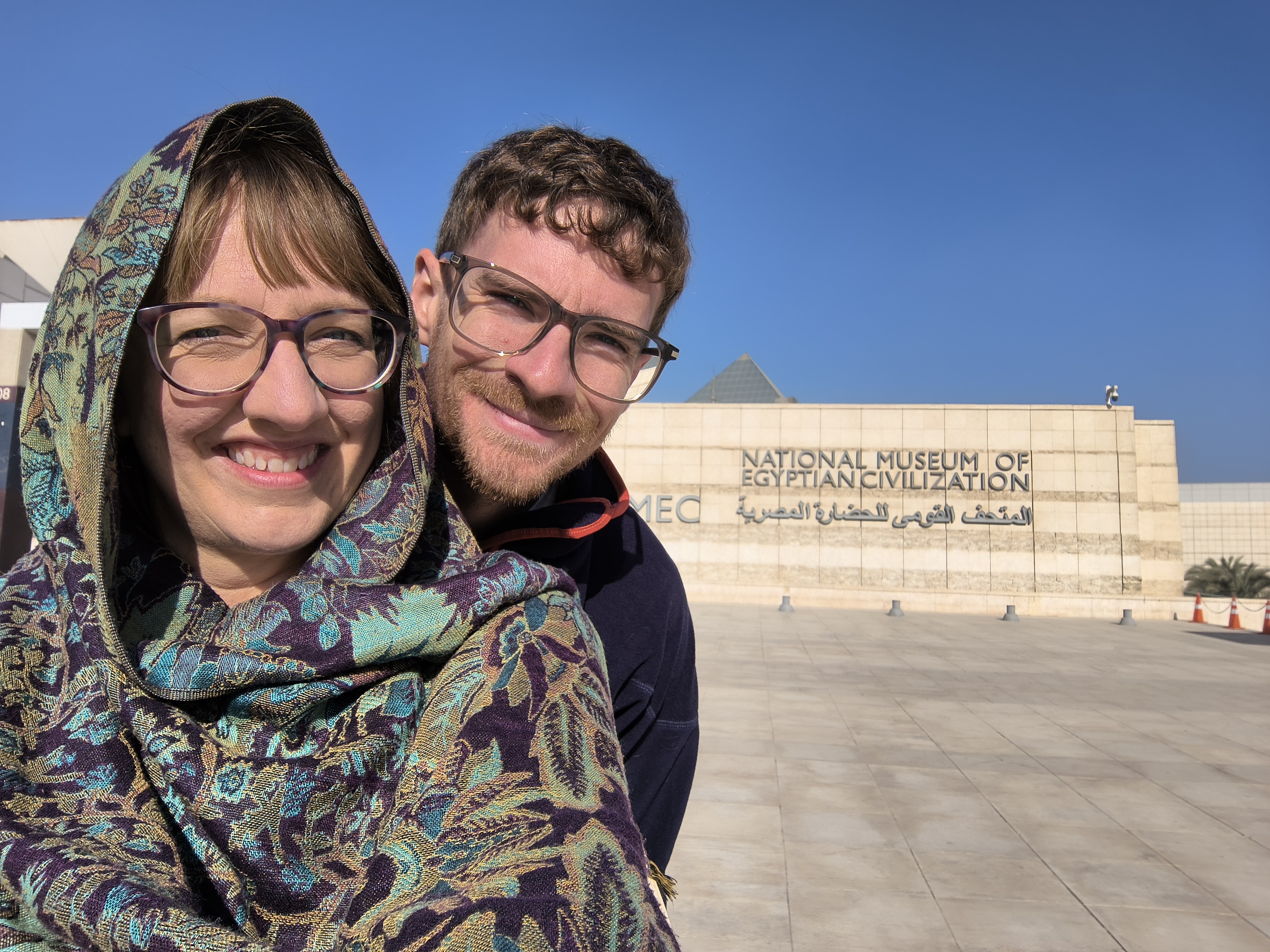
Going to a museum is not always my first choice, but on this day, I was excited. It would be a relief to be in a clean, organized building with hopefully, a coffee shop. We found an Uber and headed back to Cairo to visit the National Museum of Egyptian Civilization (NMEC). We got there early enough to enjoy seeing the mummies with only a few other tourists. It was certainly very strange to look at a bunch of essentially, dead bodies. It was fascinating and disturbing. On the wall near every glass-encased mummy was a plaque detailing the person’s achievements, most of them related to battles and how many people groups were defeated. We kept commenting on how tiny the mummies were. It makes sense since our bodies are 60% water, that when all the liquids are taken away, what remains is a dried-up raisin. The bones of the hands and feet were so skinny. Some of them still had hair! It was wild. There were about 20 mummies on display.
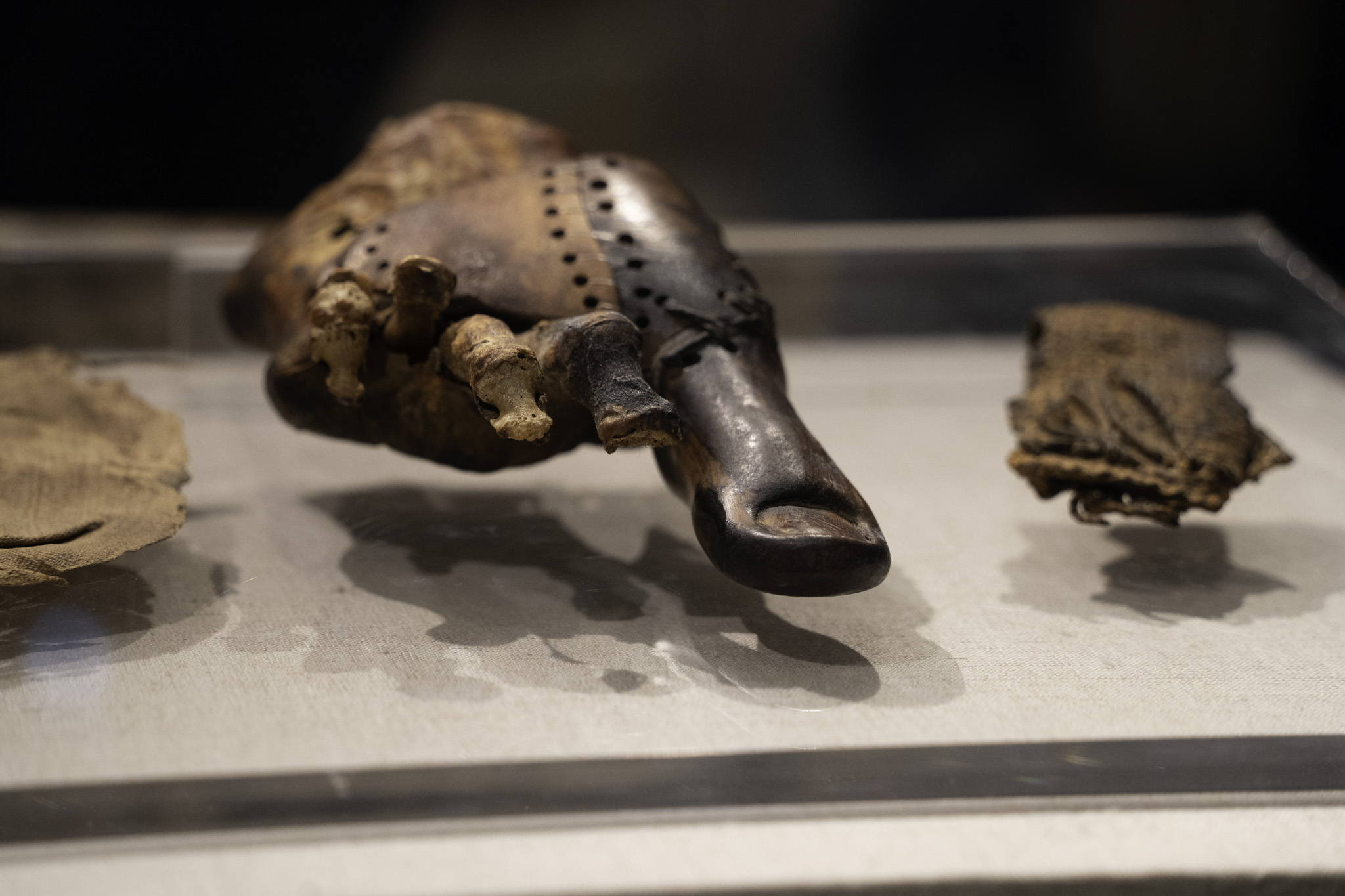
We looked at the artifacts upstairs where many more tourists had arrived. The part that interested me the most was a small exhibit with a mummified foot with what looked like a brace of some kind. It turned out to be the oldest known prosthetic. The foot belonged to a female who had her big toe amputated by a surgeon to prevent infection. Then, a prosthetic was made to allow the patient to develop a normal walking gait. This fascinated me because my dad has a prosthetic leg. I watched the info video about five times.
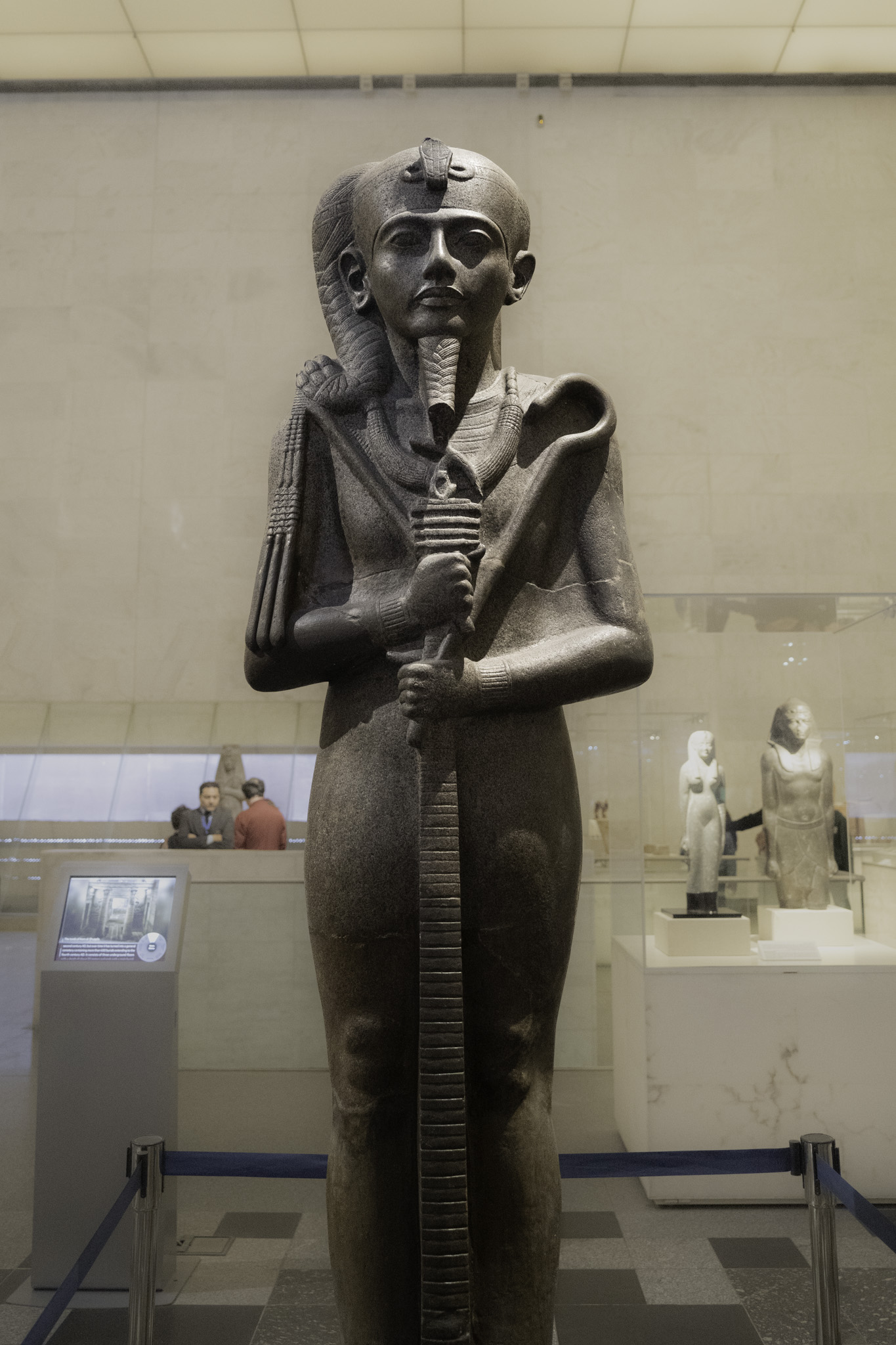
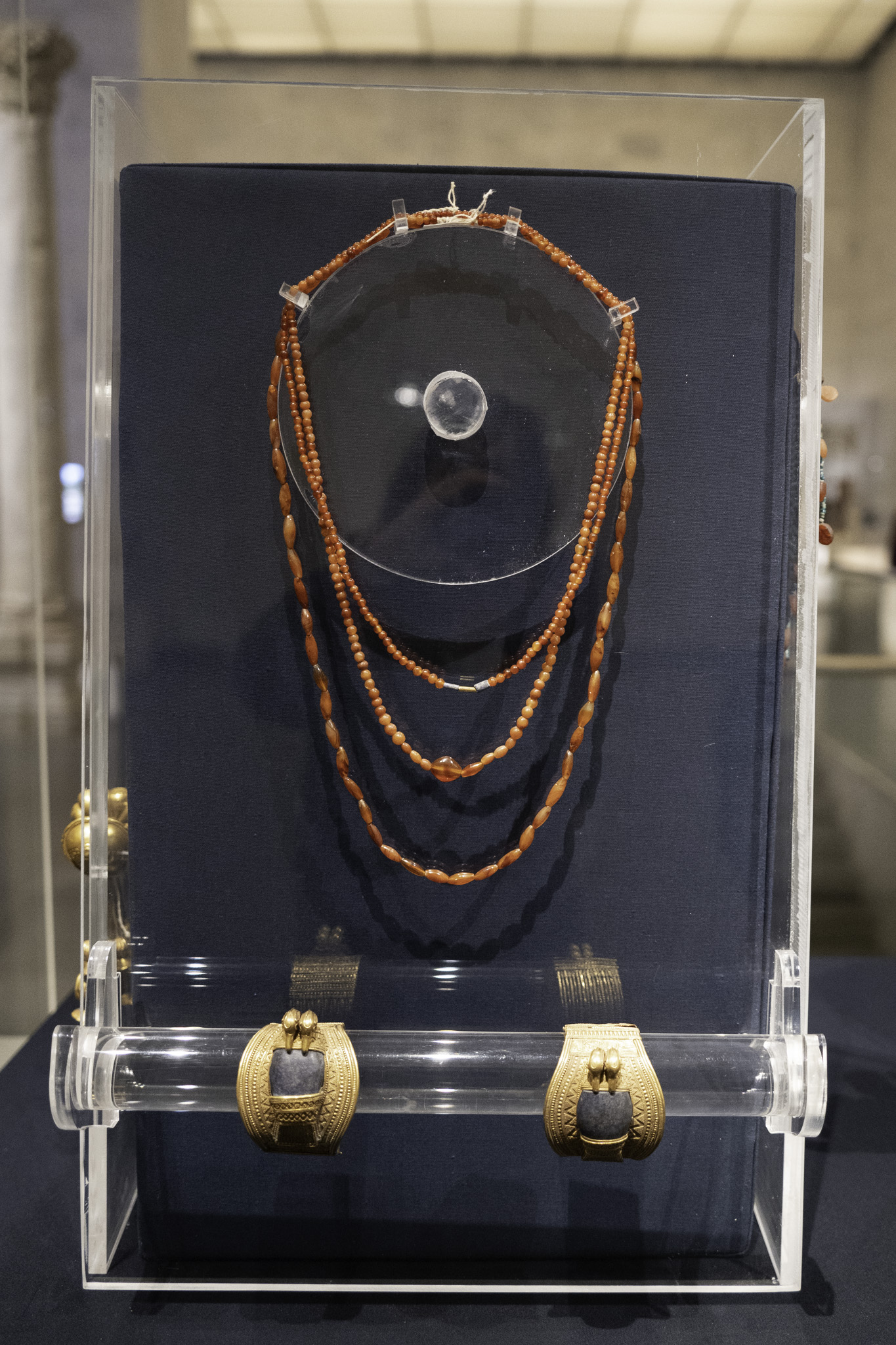
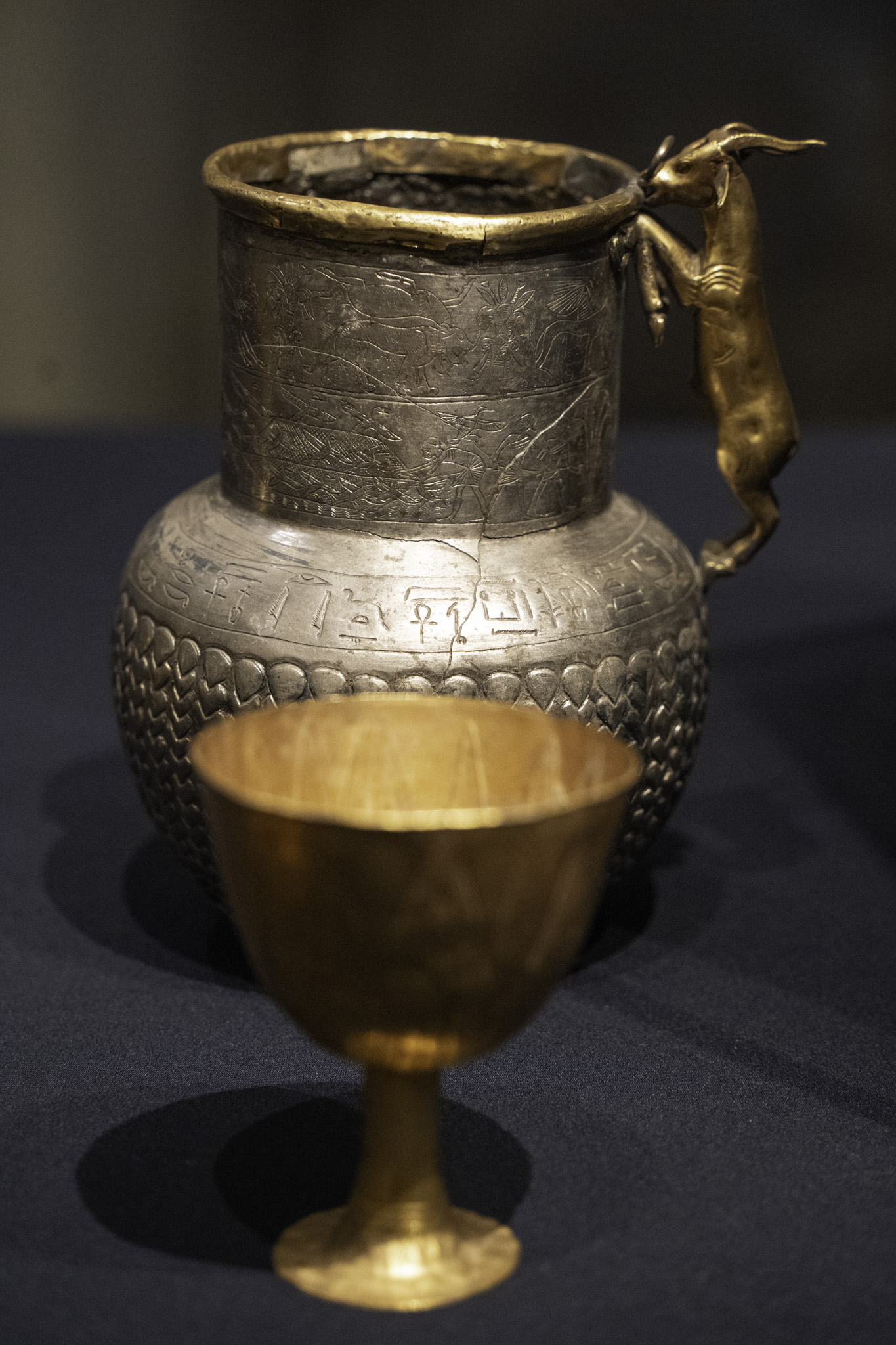
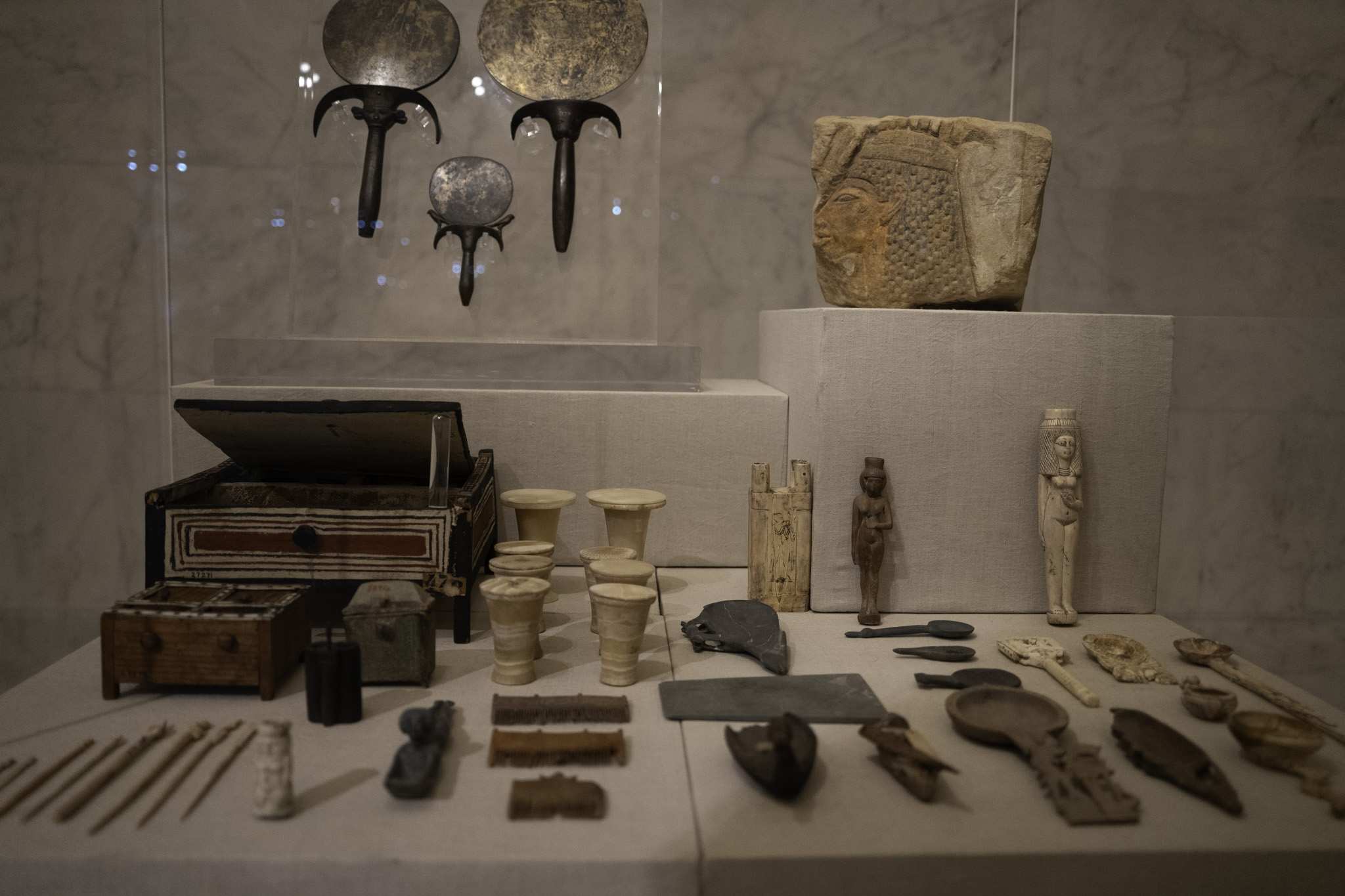

Callum was tickled by a display of Egyptian cosmetics. He mostly found humor in the placard that accompanied the group of objects which stated matter-of-factly that “since the beginning of time, women have been intrinsically motivated to adorn and beautify themselves” or some such wording. Basically, it made it seem like all women want to wear makeup and jewelry, and that this was a deep-rooted need.
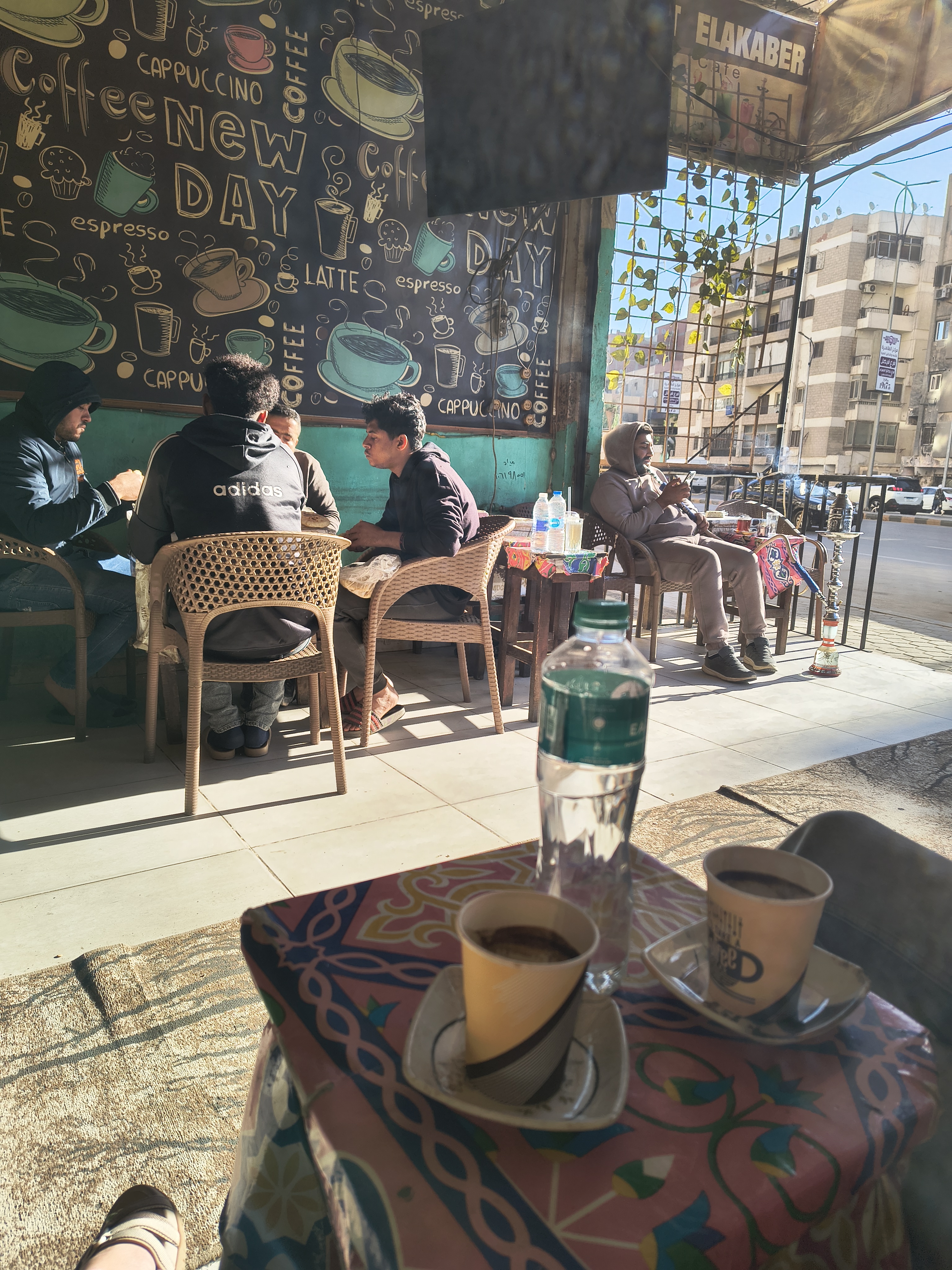
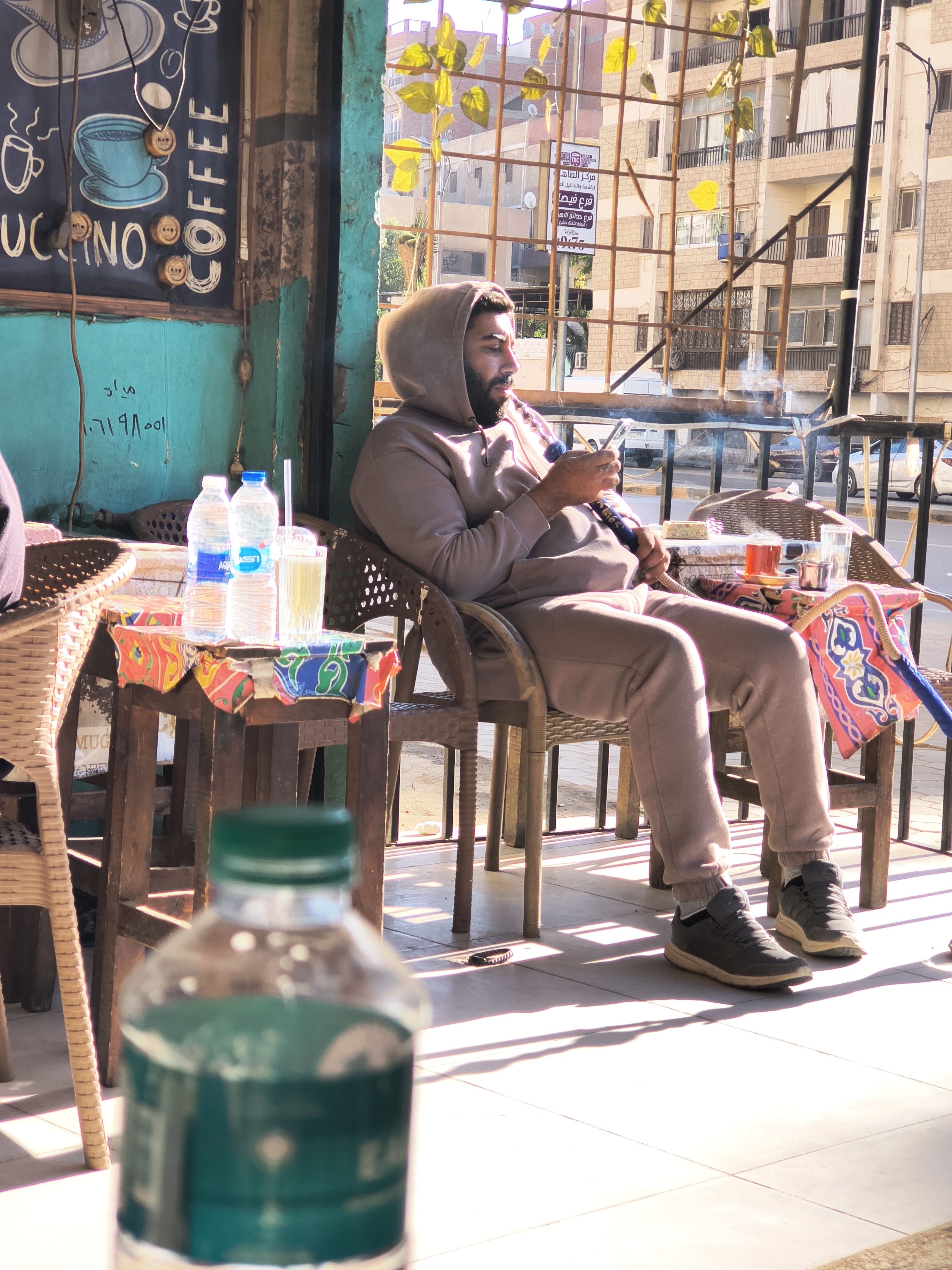
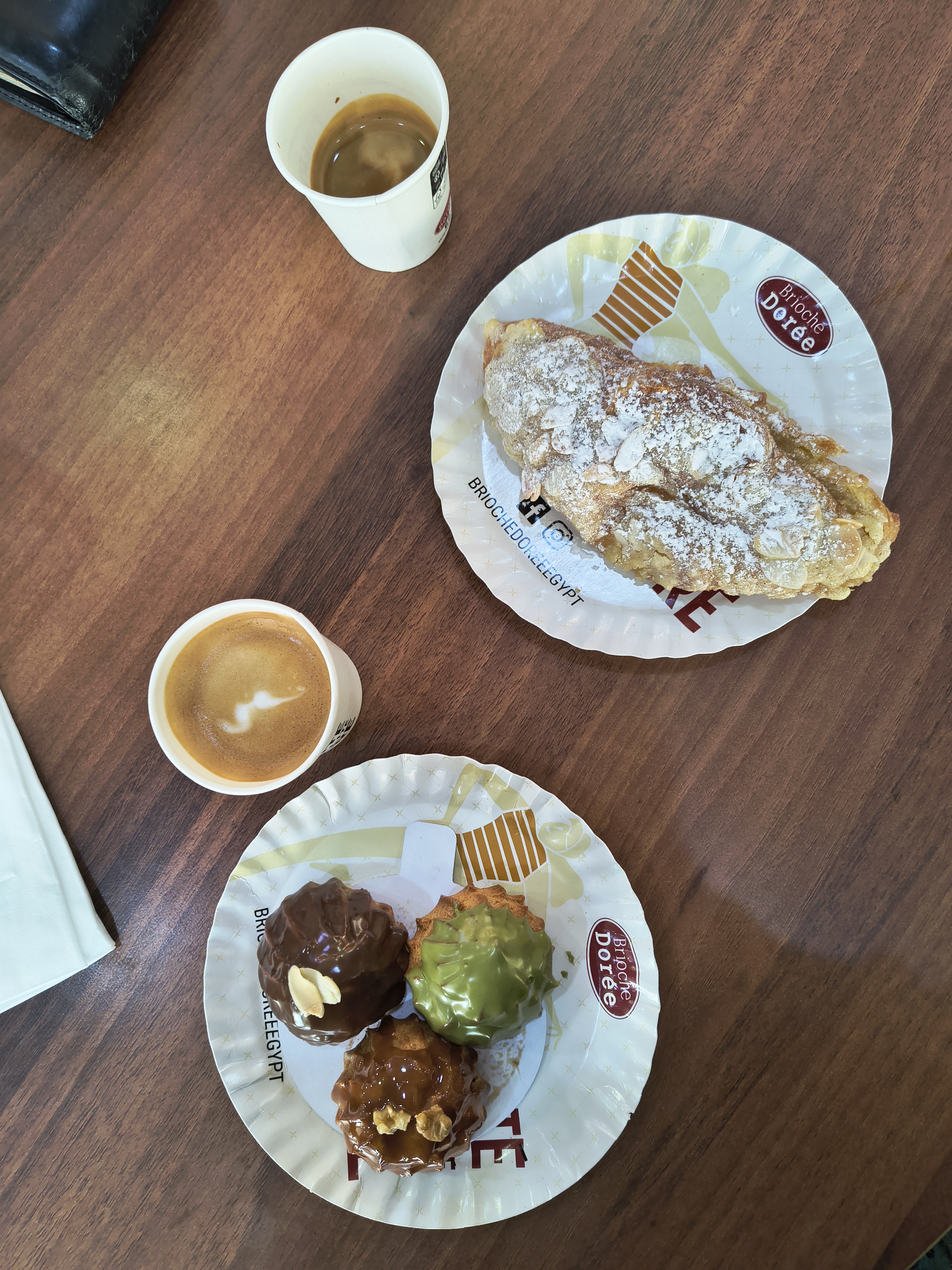
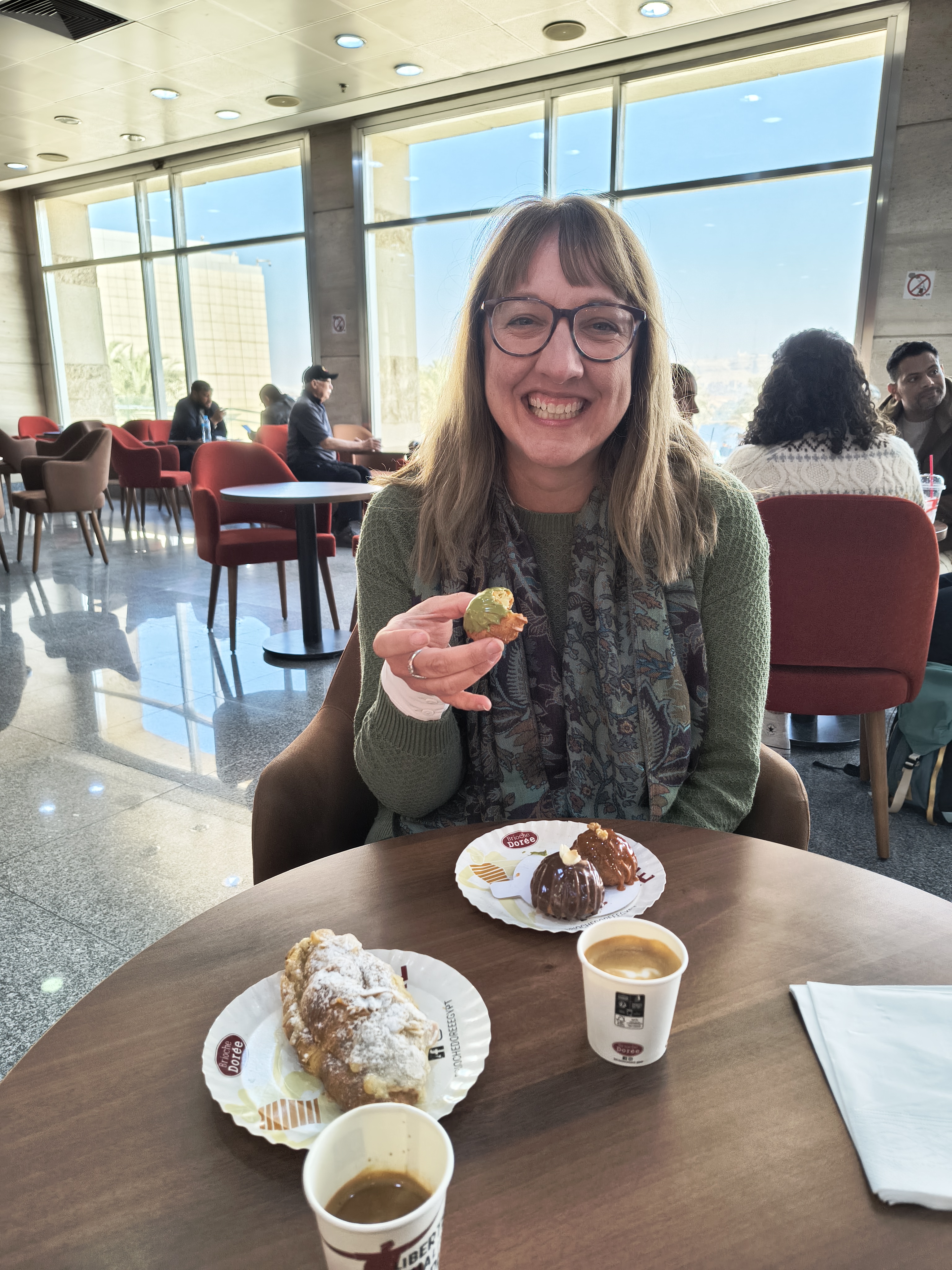
We had a break in the French-themed coffee shop, and I had a browse in the gift shop (the two best things at a museum, teehee.) This experience is in direct contrast to the Turkish coffee we drank just outside our hotel earlier that morning. It was very….sludgy. The espresso, Americano and pastries were much more delicious and well-received.
Our next stop on our tour of Cairo was to visit a bustling open-air bazaar called Khan Al-Khalili. We immersed ourselves in the busyness of the narrow corridors, swiftly moving our eyes right and left to look at the wares. We were surrounded by many other people, but most of them were Arabic people, so we stood out to the vendors as potential dollar signs. I truly just want to look at things in peace without being guilted into spending money. It’s impossible in some locations though. Here was one example. After getting stuck in an endless clothing section of the market, we finally turned around and ducked in and out of the maze to find the most interesting part: the spice market. Here my nose instantly filled with cumin, cardamom, cinnamon, turmeric. The piles of spices were attractive and the vendors here seemed less bothered by our presence. I even snapped a photo of one man who I called ‘beautiful’ and who thanked me with smiles, telling me I was ‘too kind’.
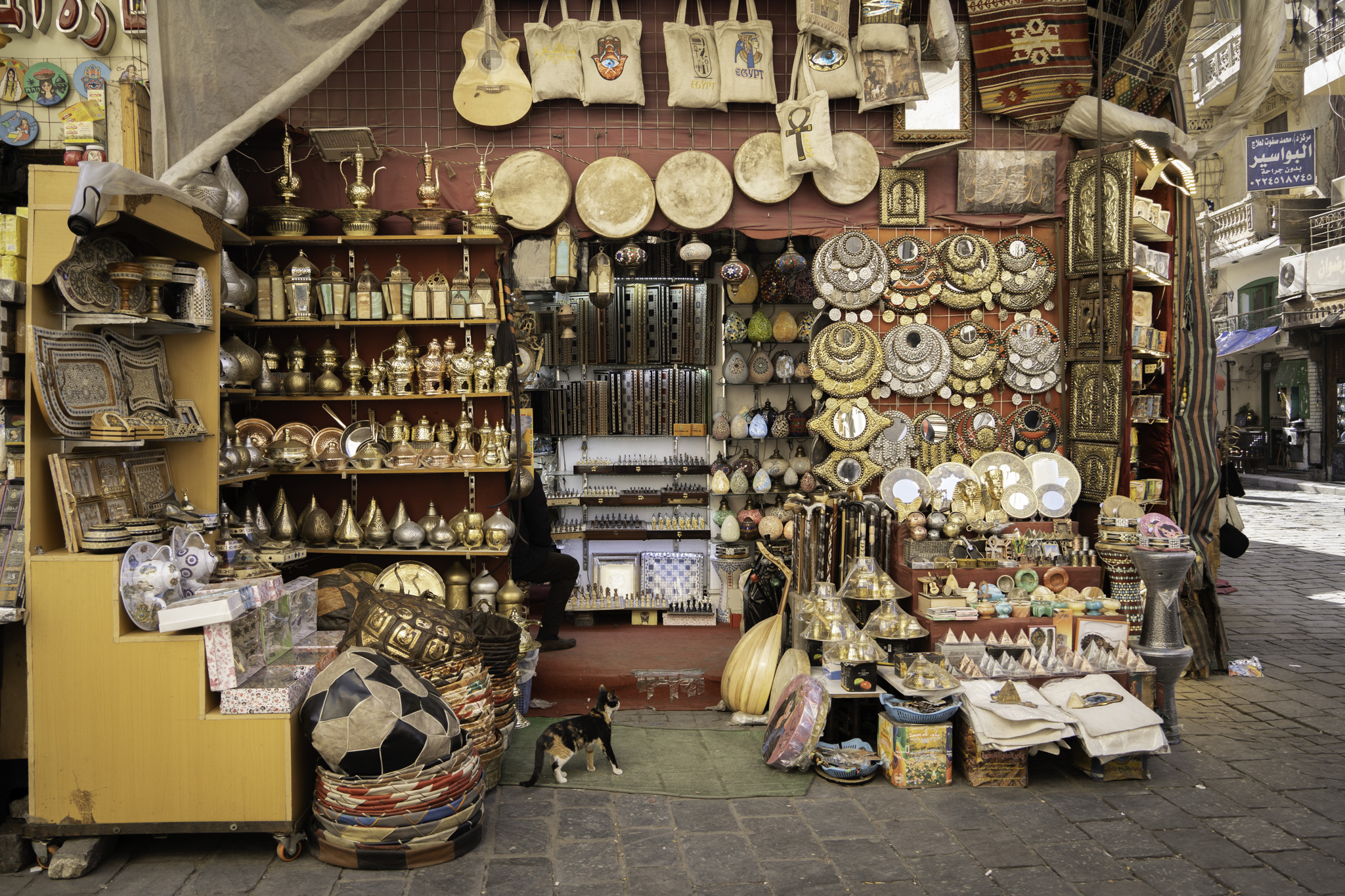


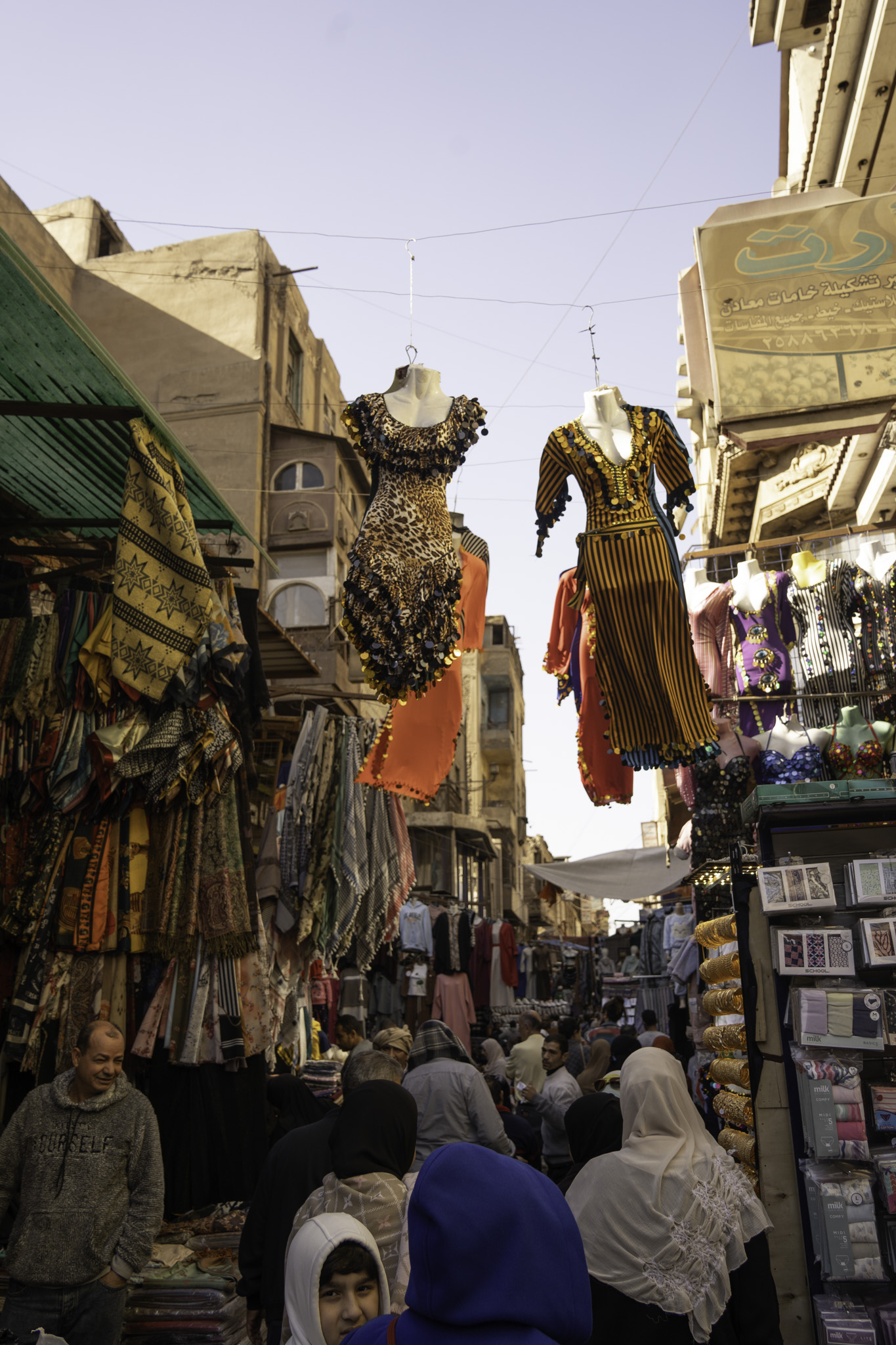
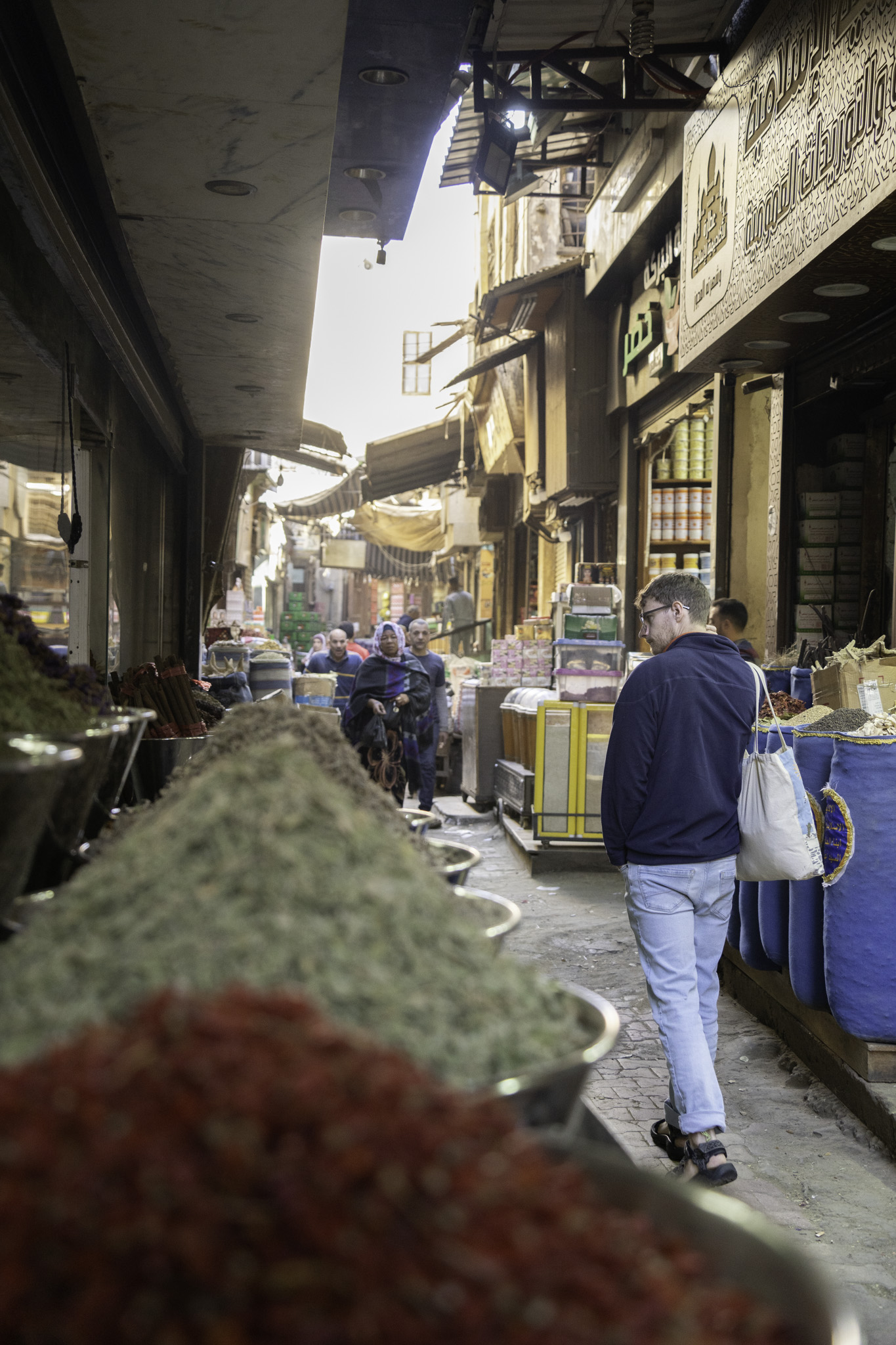

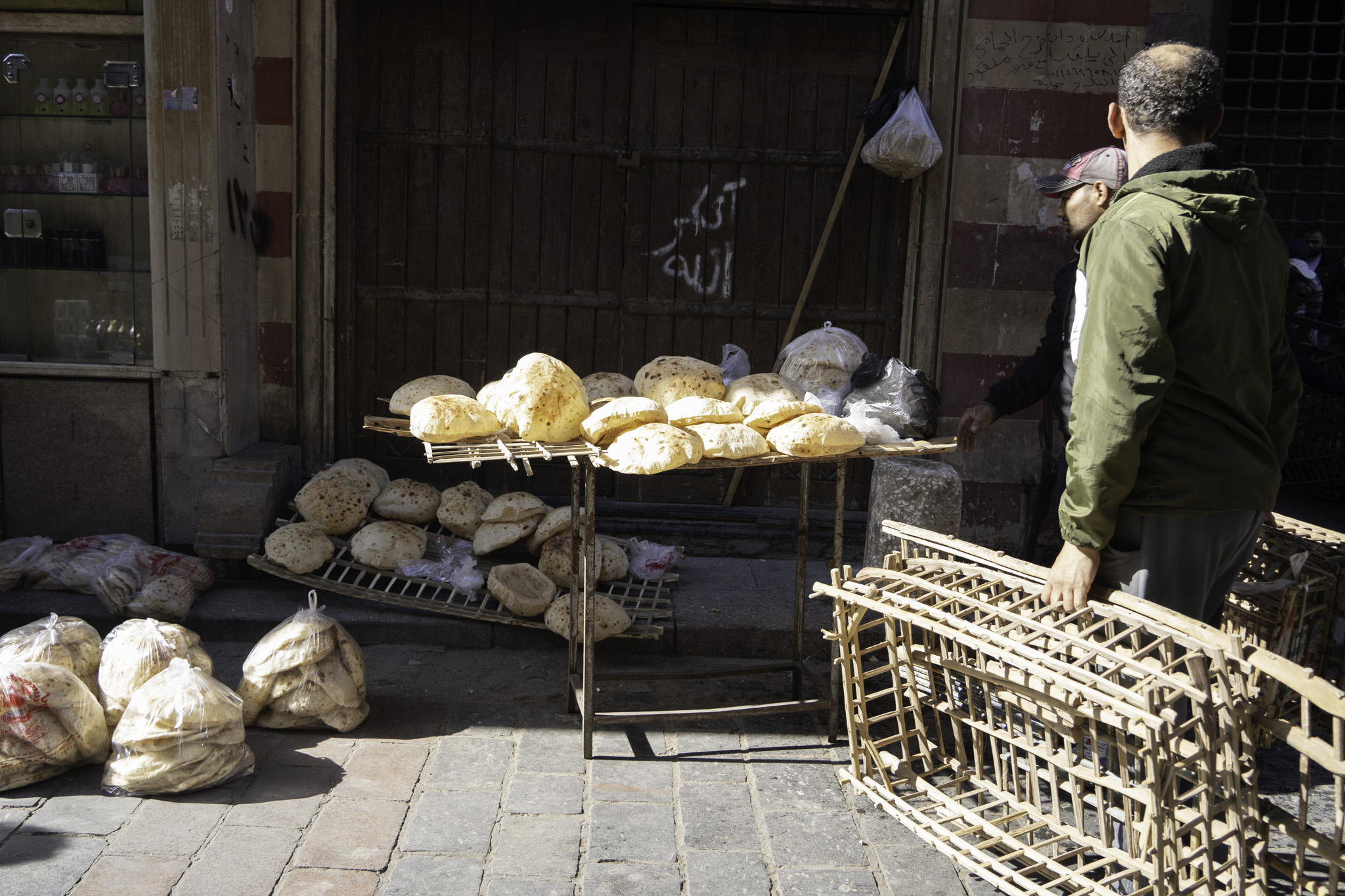
We found a little café to eat some lunch—Egyptian ‘pancakes’. The wait for our food was very long but we were entertained by all of the street cats adorably begging for attention and food, once we got it.
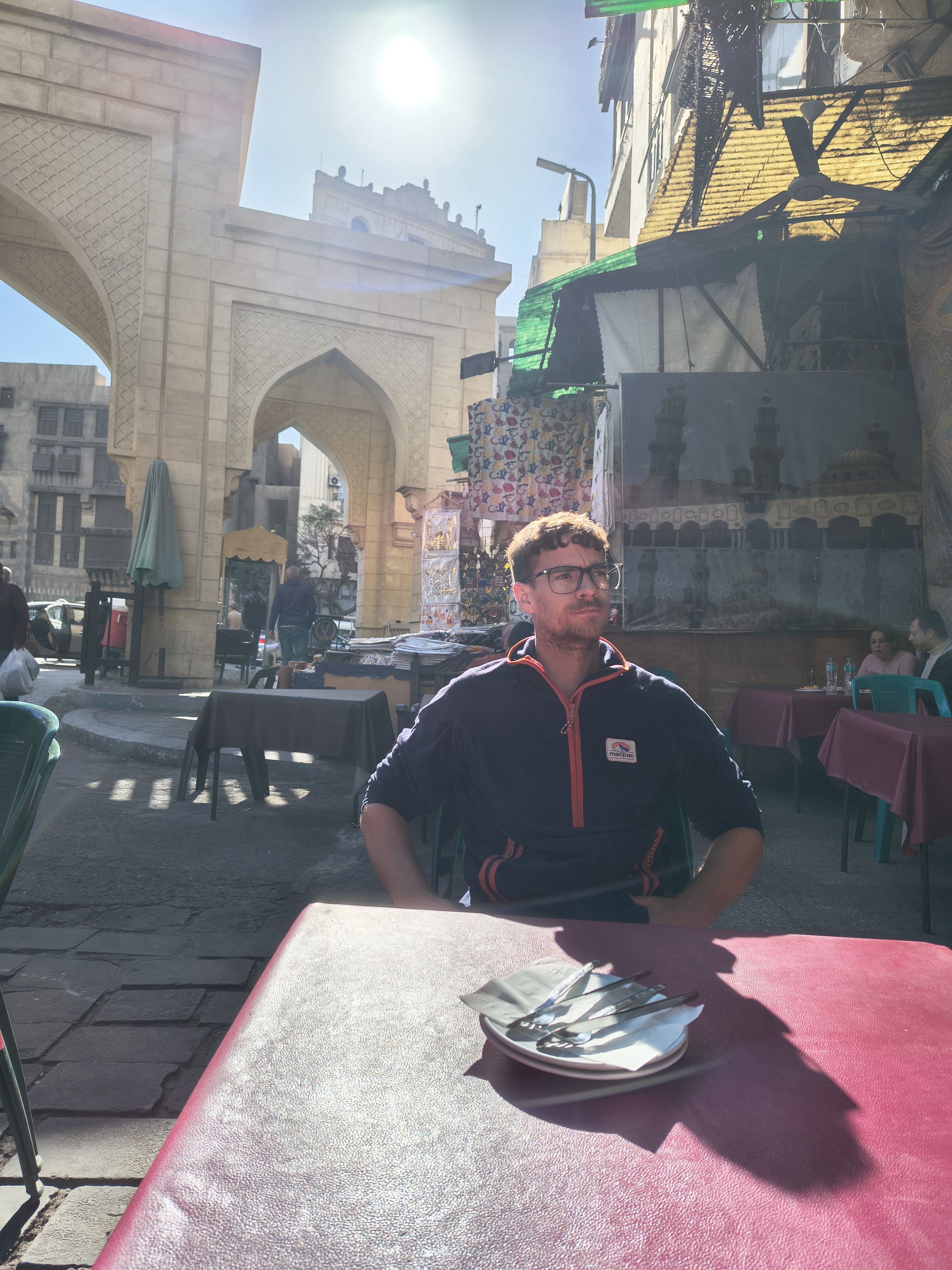
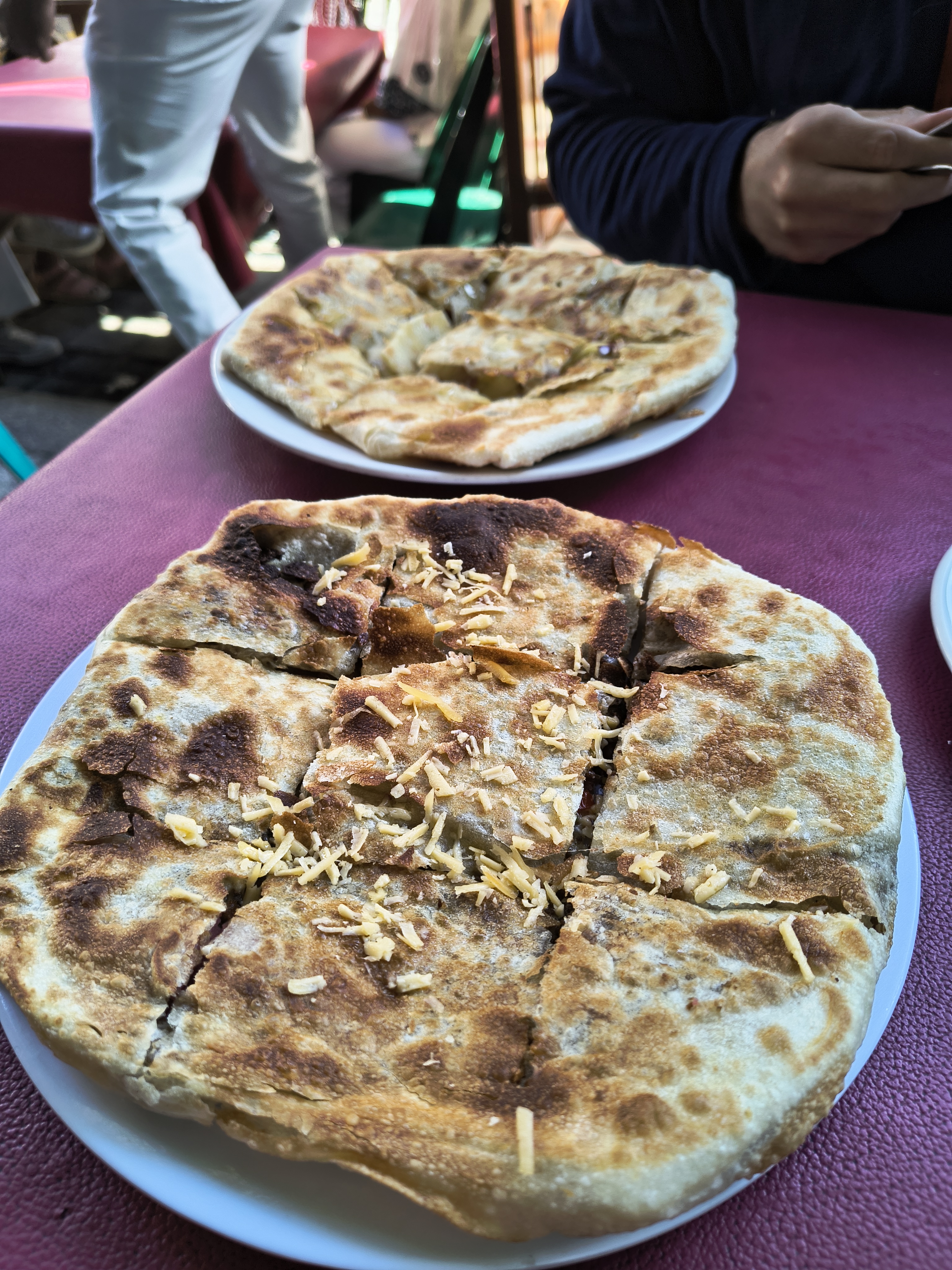
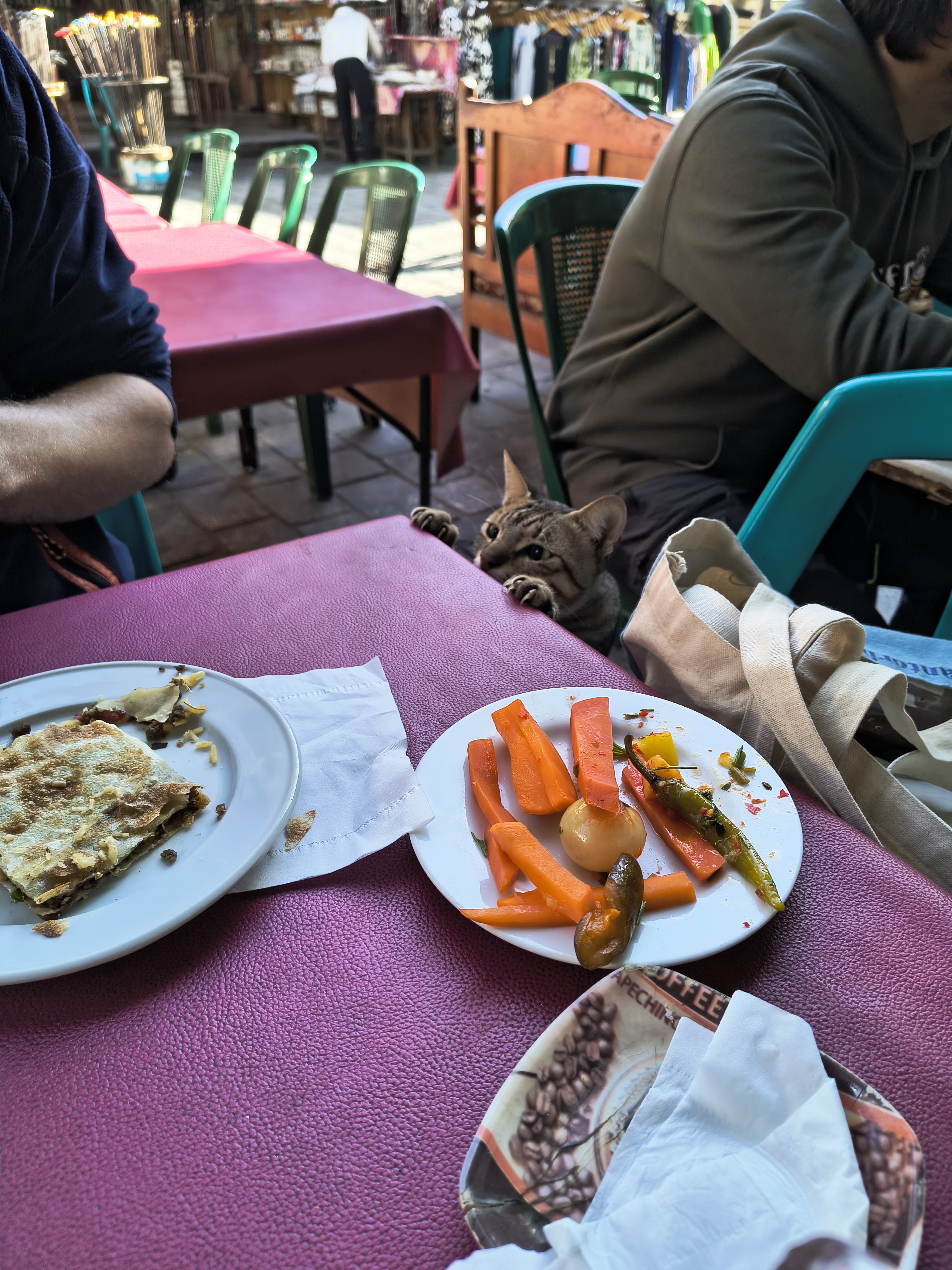
We had an appointment with a tour guide afterward at the Citadel. Finding our way there in a timely manner proved difficult but, since we were his only guests, it wasn’t too big of a deal. We navigated the chaos of the streets, managed to hail an Uber going the right direction, and made it to our tour location not long after. Mahmoud was well-spoken and offered us his credentials upon meeting him. He explained that he was an accredited Egyptologist and had studied his degree for four years to become a tour guide for this and several other sites around Cairo. We were impressed and glad that we had found someone legitimate to tell us about the Citadel.
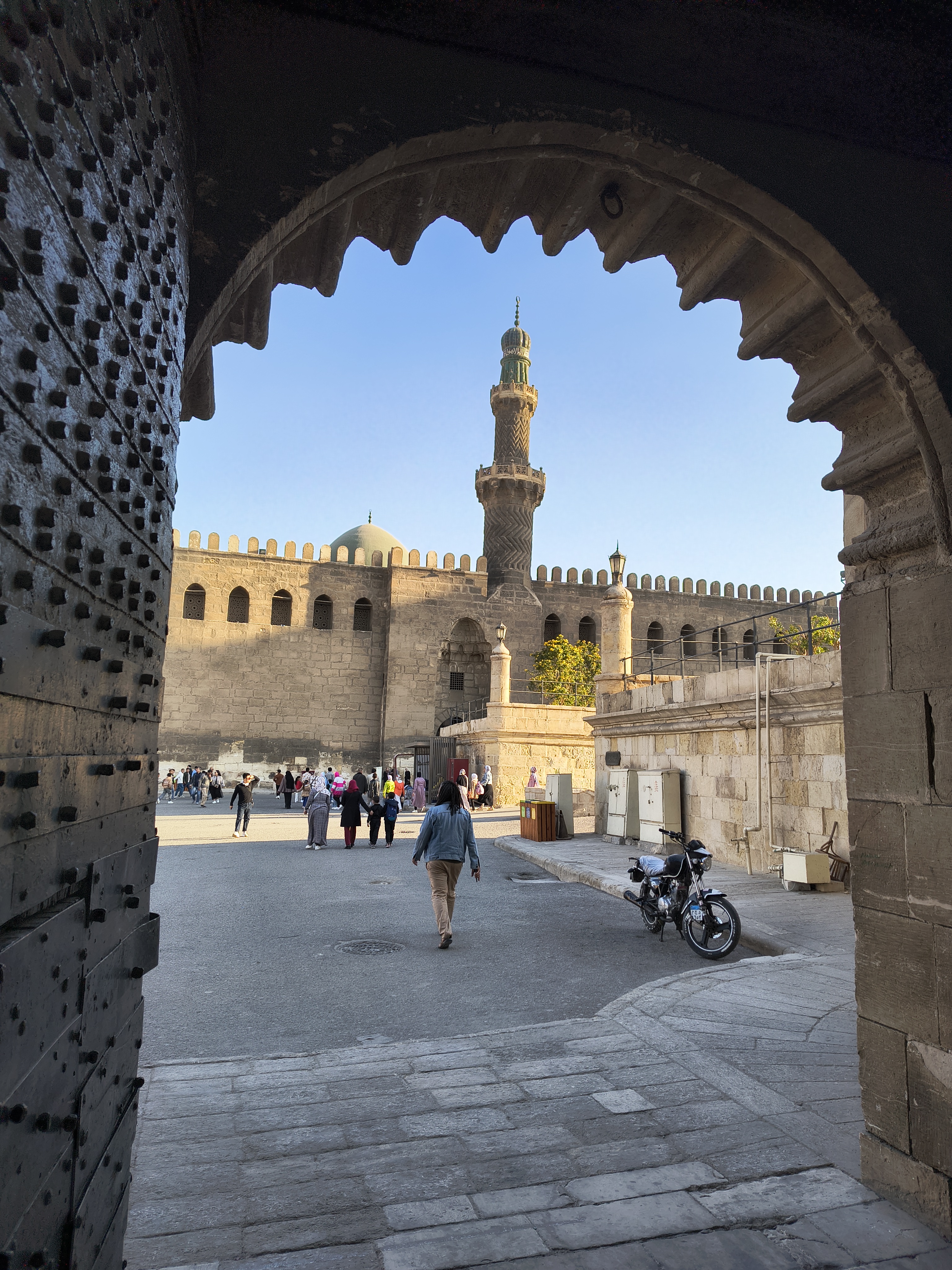
The Citadel of Cairo is atop a mountain overlooking all of Cairo and from a distance it dominates the skyline. It is a medieval Islamic-era fortification built by Saladin from the 12th century and developed over the centuries by Egyptian rulers. It is now a preserved historic site, including mosques and museums.
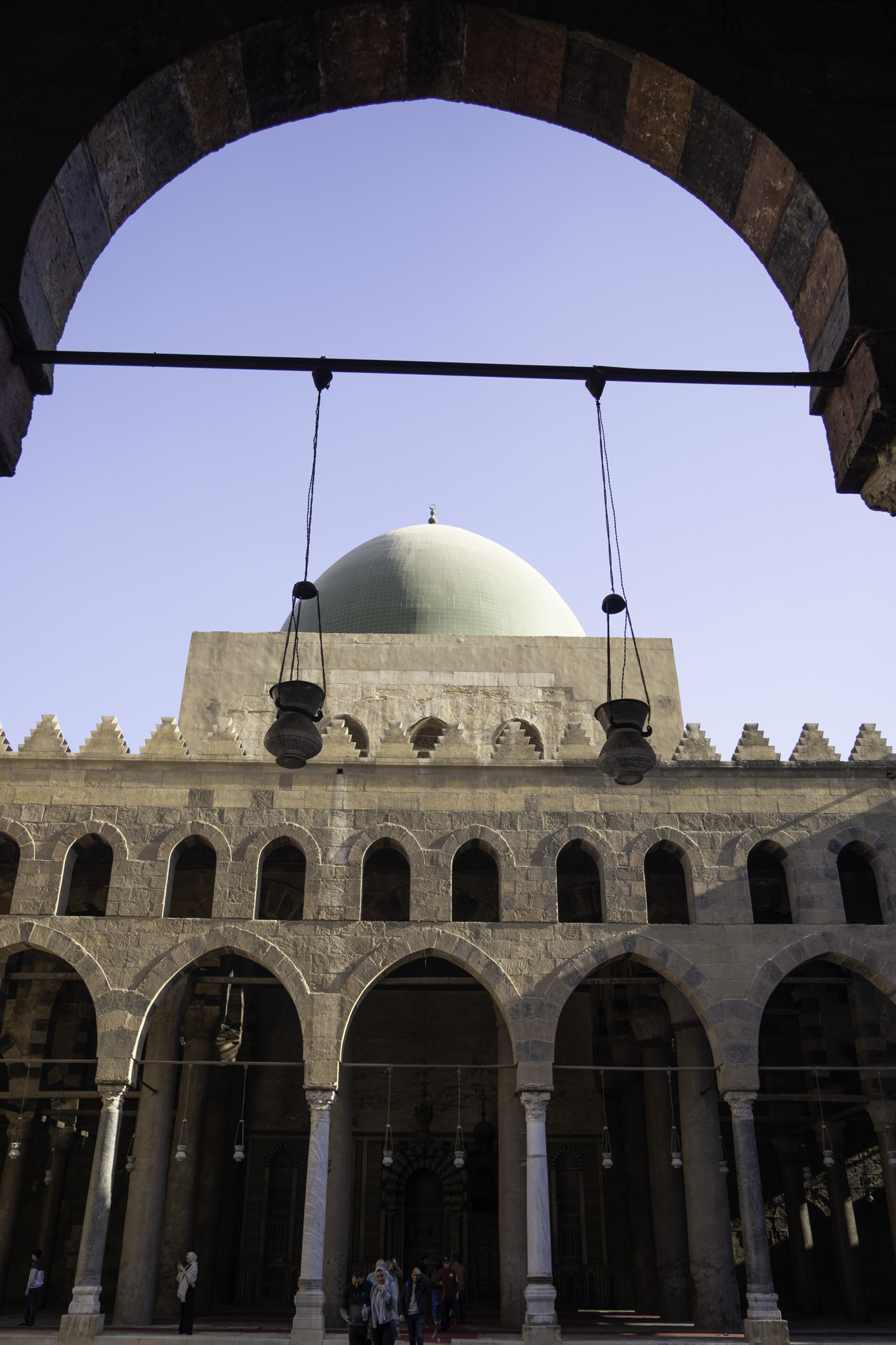
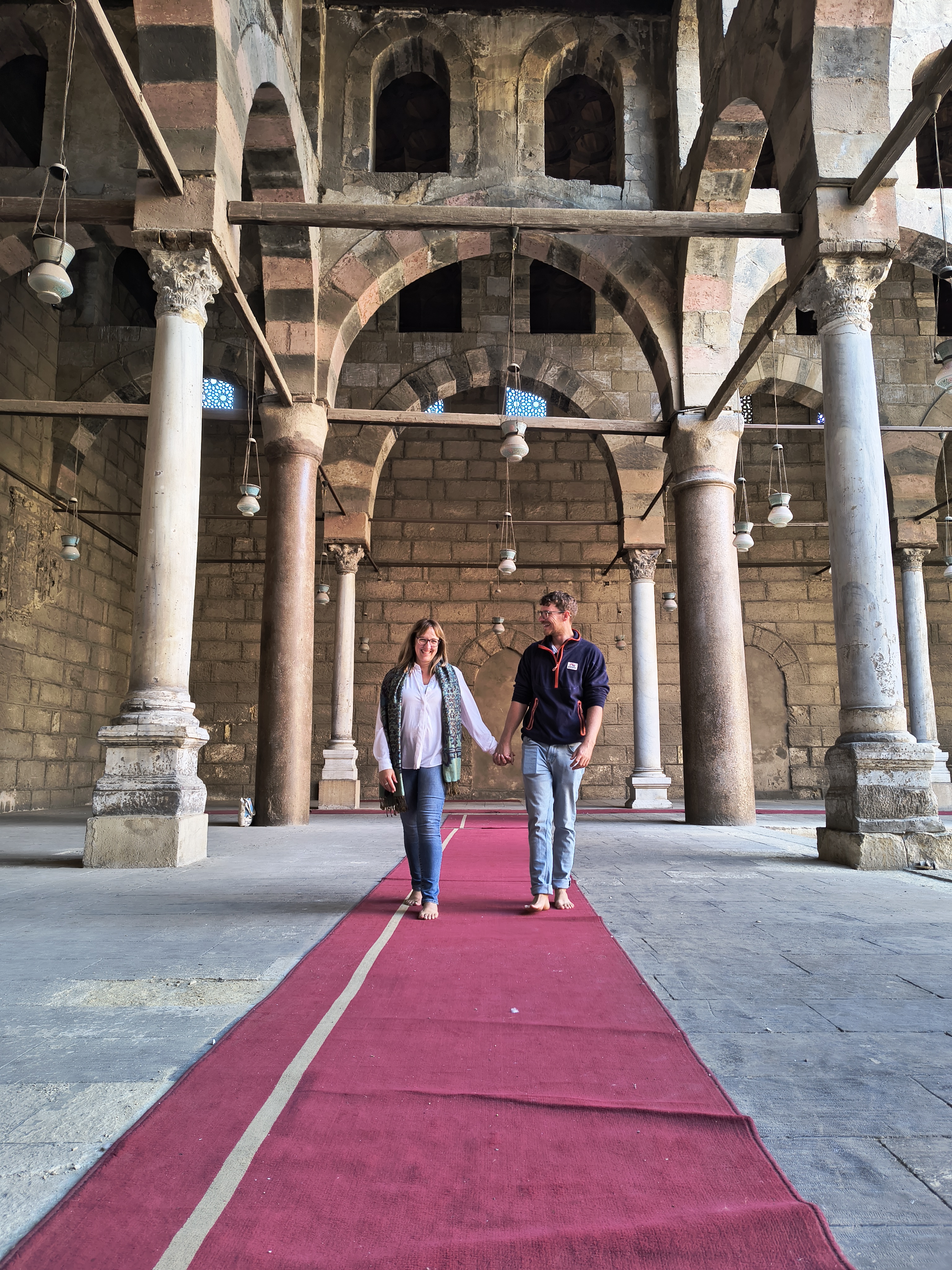
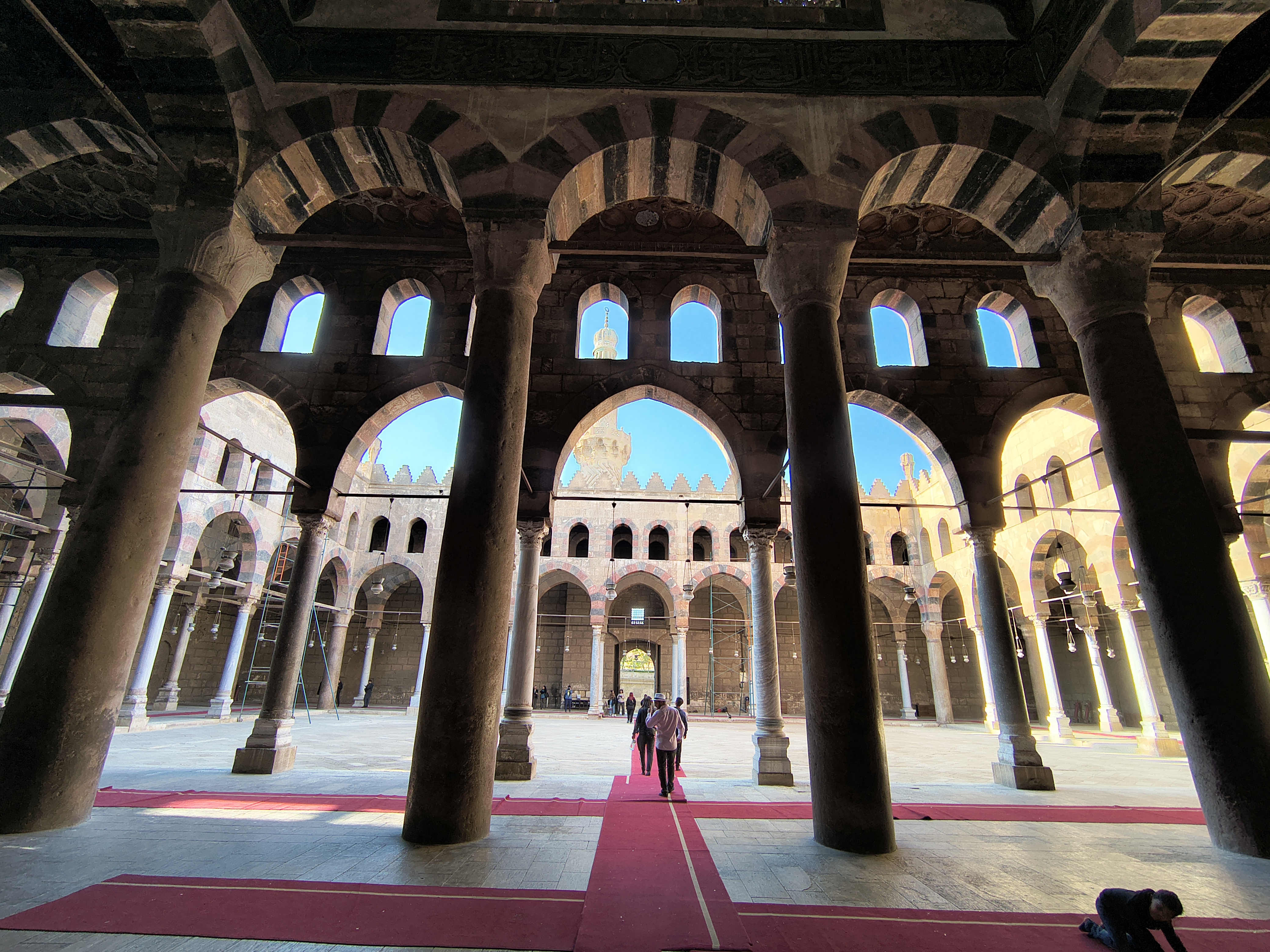
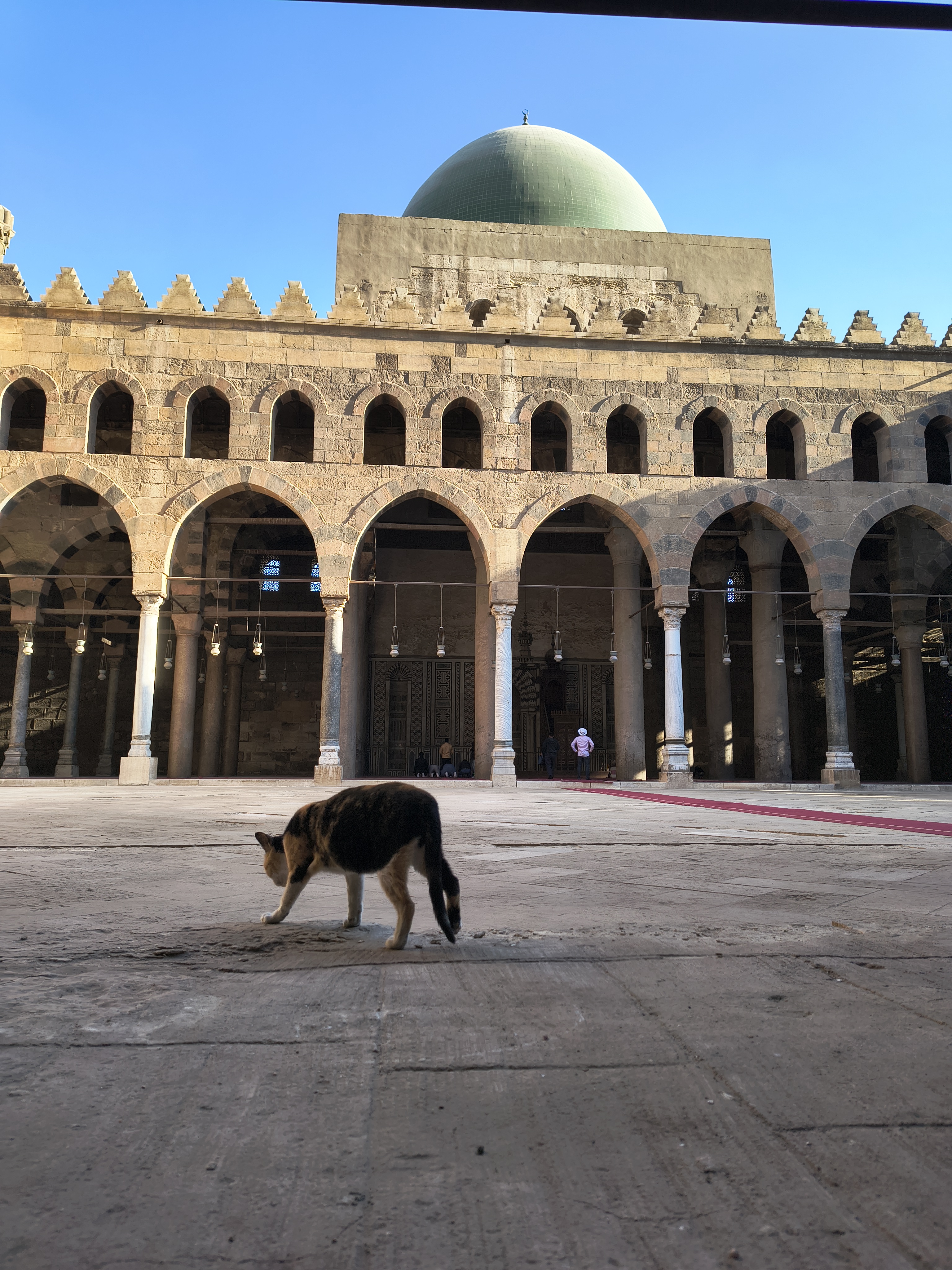
We toured it’s three mosques starting with the Al-Nasir Muhammed mosque, which was built in the early 1300s. It was a simple mosque with just a single large courtyard and of course a place to pray facing Mecca. What Mahmoud pointed out to us was that the builder of this mosque borrowed and recycled something to construct it. He asked us to have a look and try and identify what was borrowed. We were blind to it, until he pointed out that all the columns were different—in style, time periods, and also in size. It would have taken a lot of mathematics and planning to make use of the different columns in a new build.
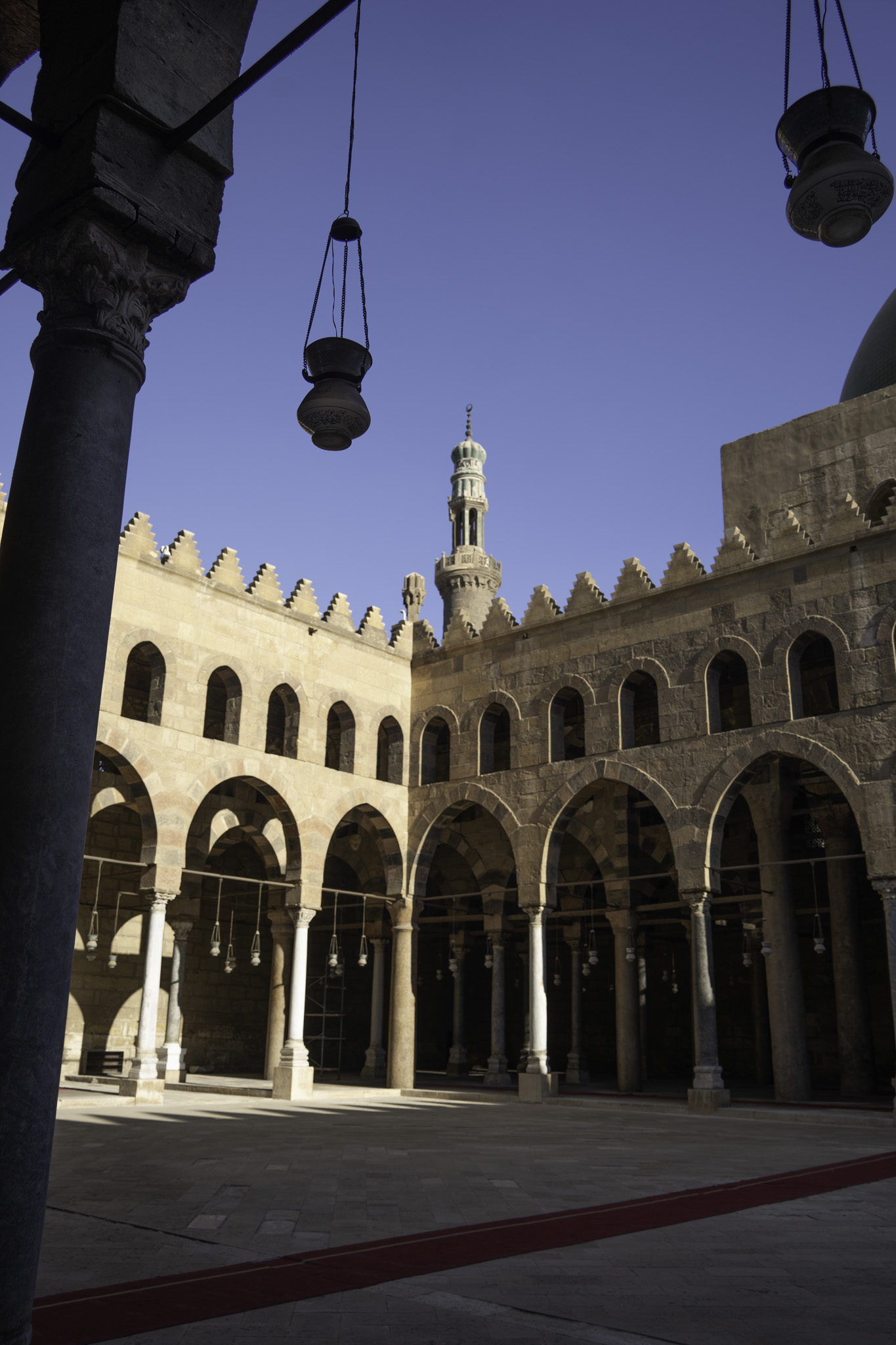
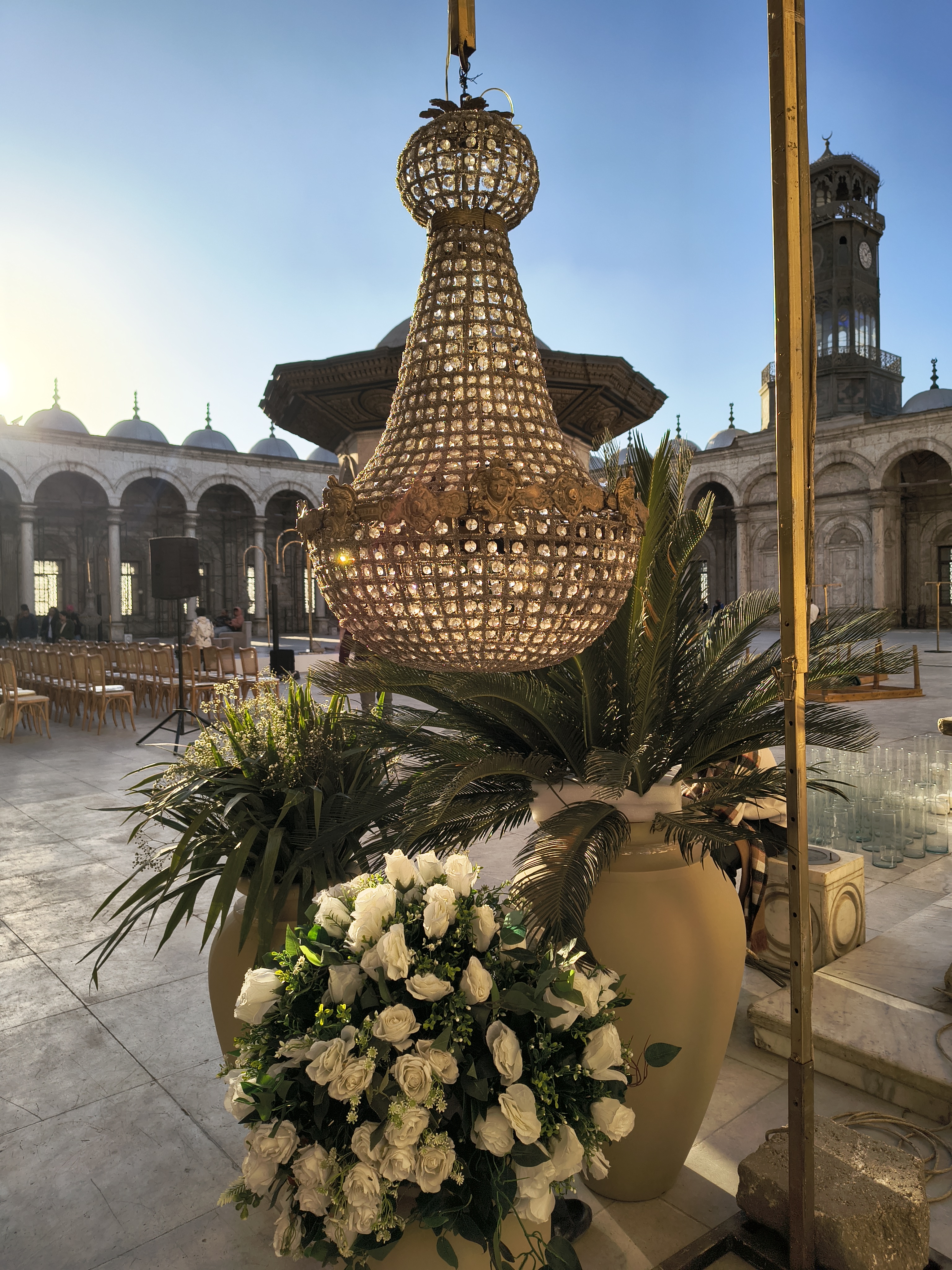
We moved on to the Mosque of Sulayman Pasha which was built in the 1500s and showed a lot more intricate detail. It was a smaller building and there were a group of wedding-planners decorating it for a wedding later that evening.
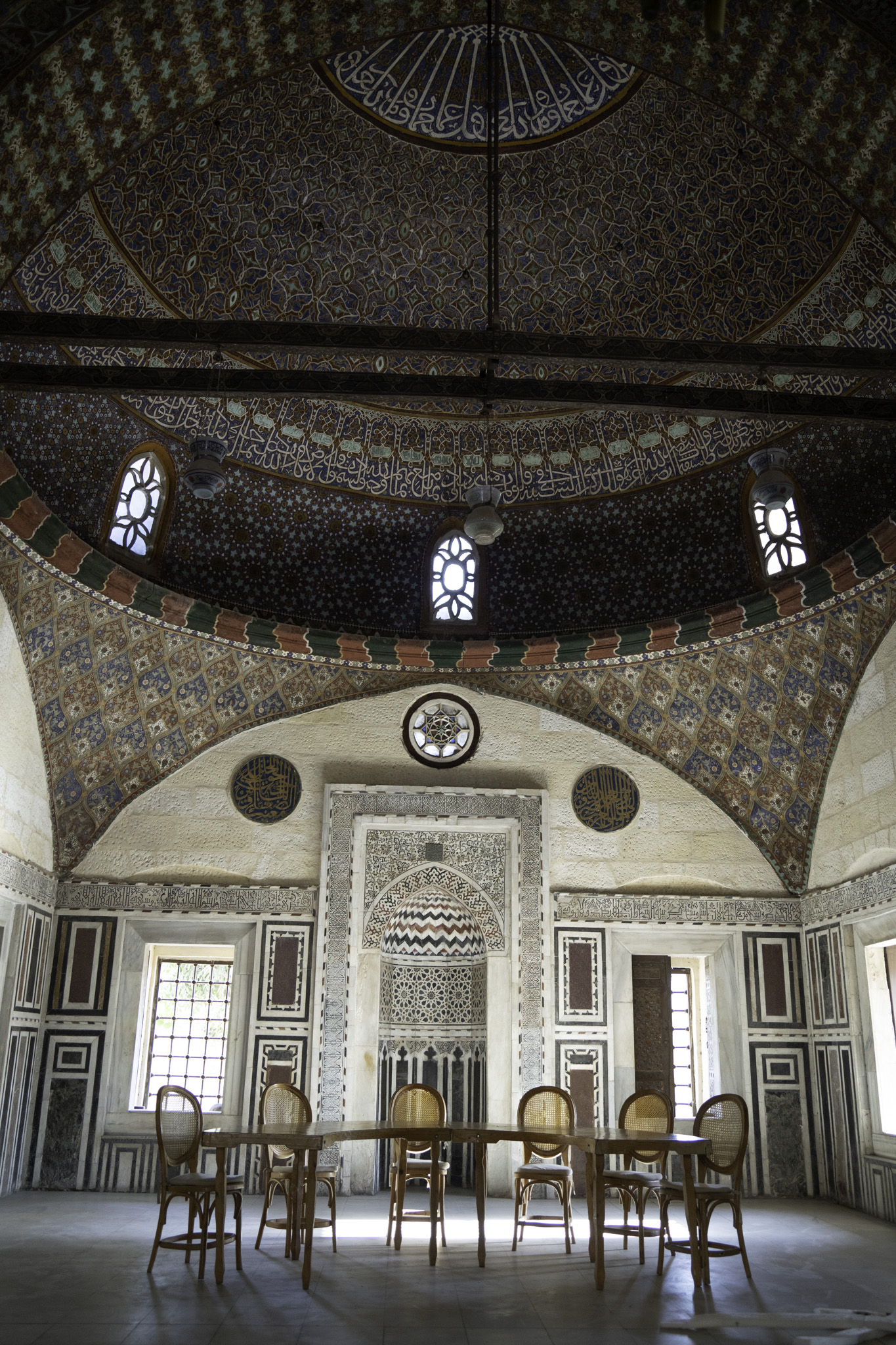
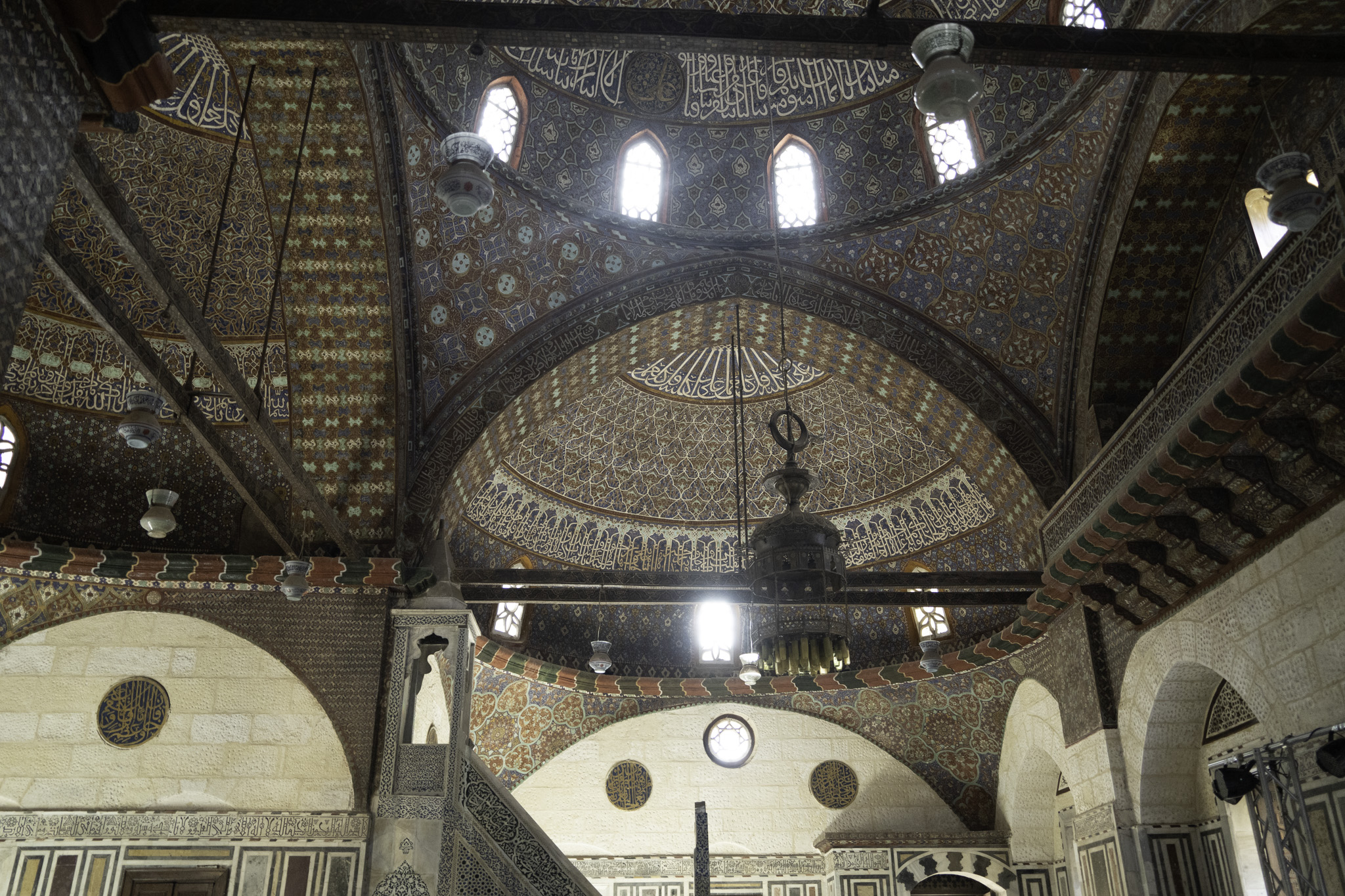
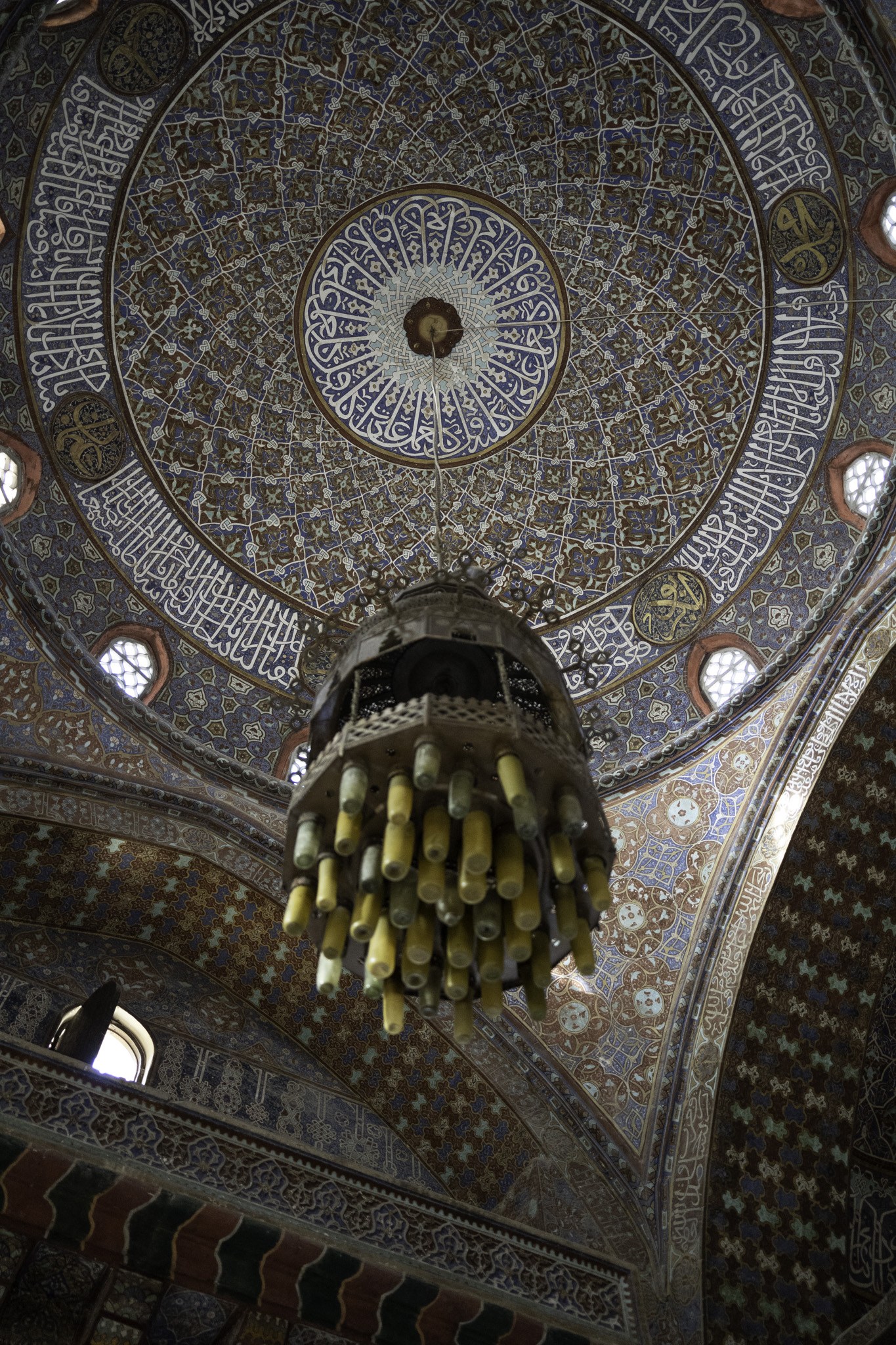
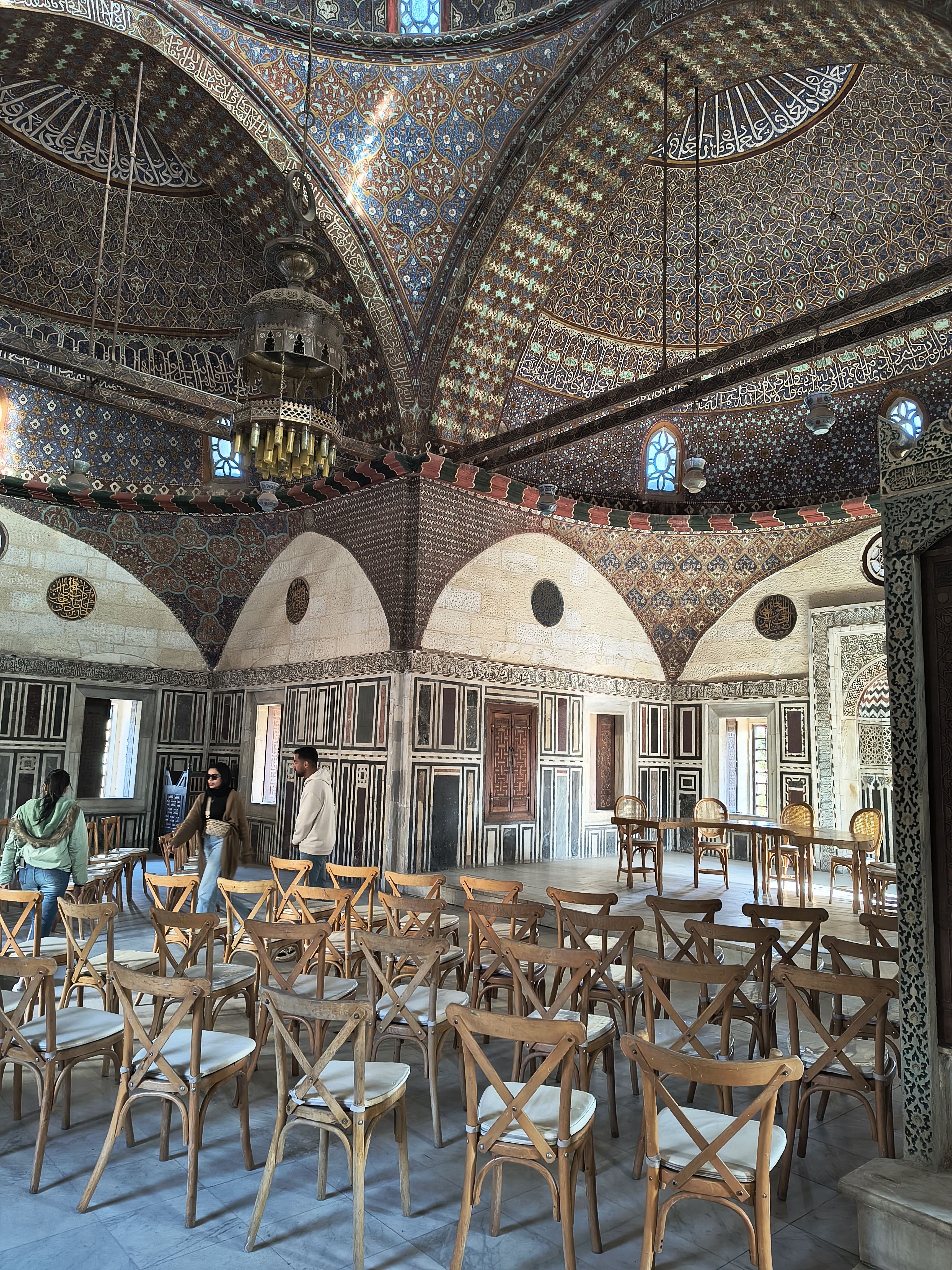
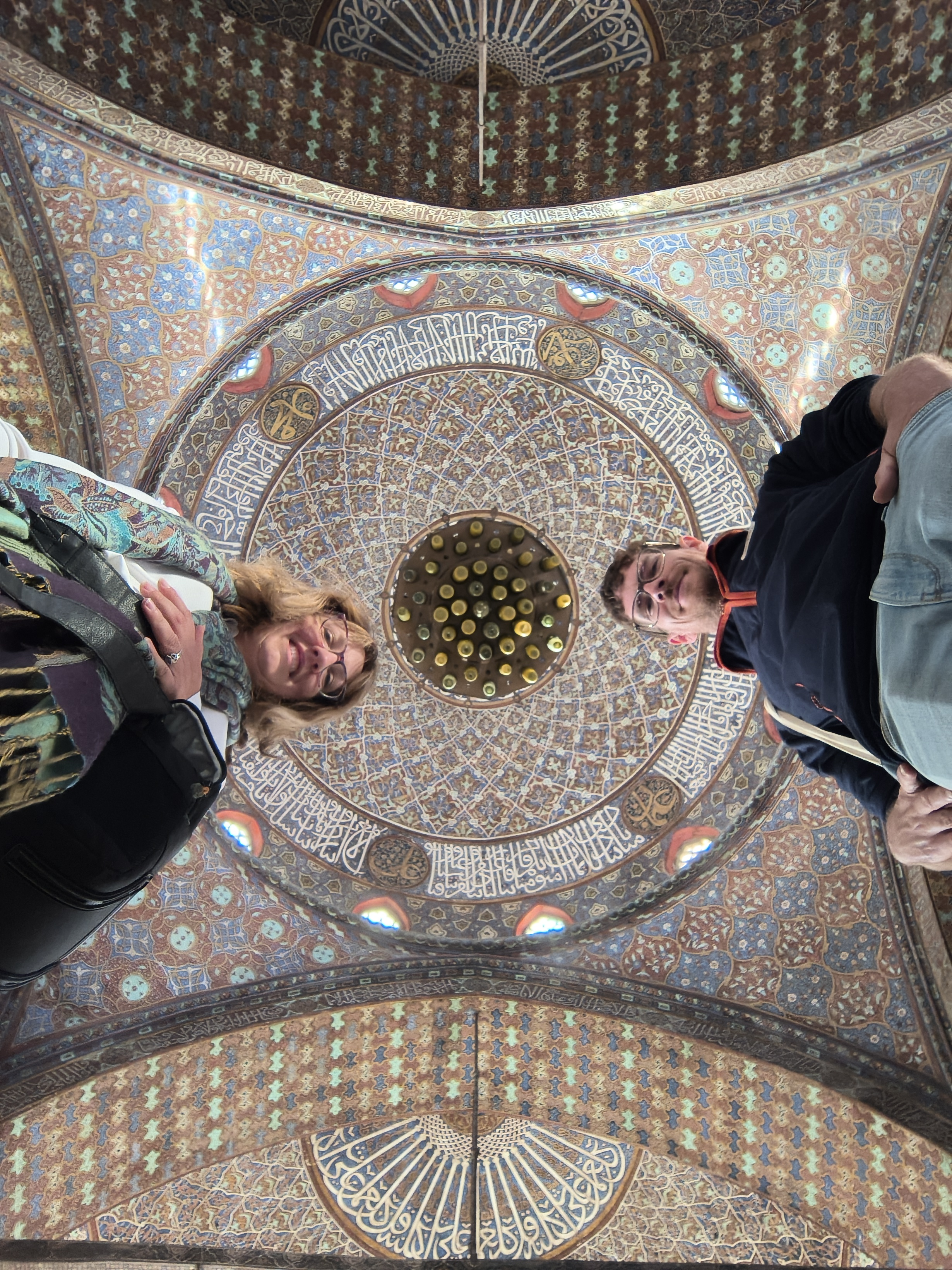
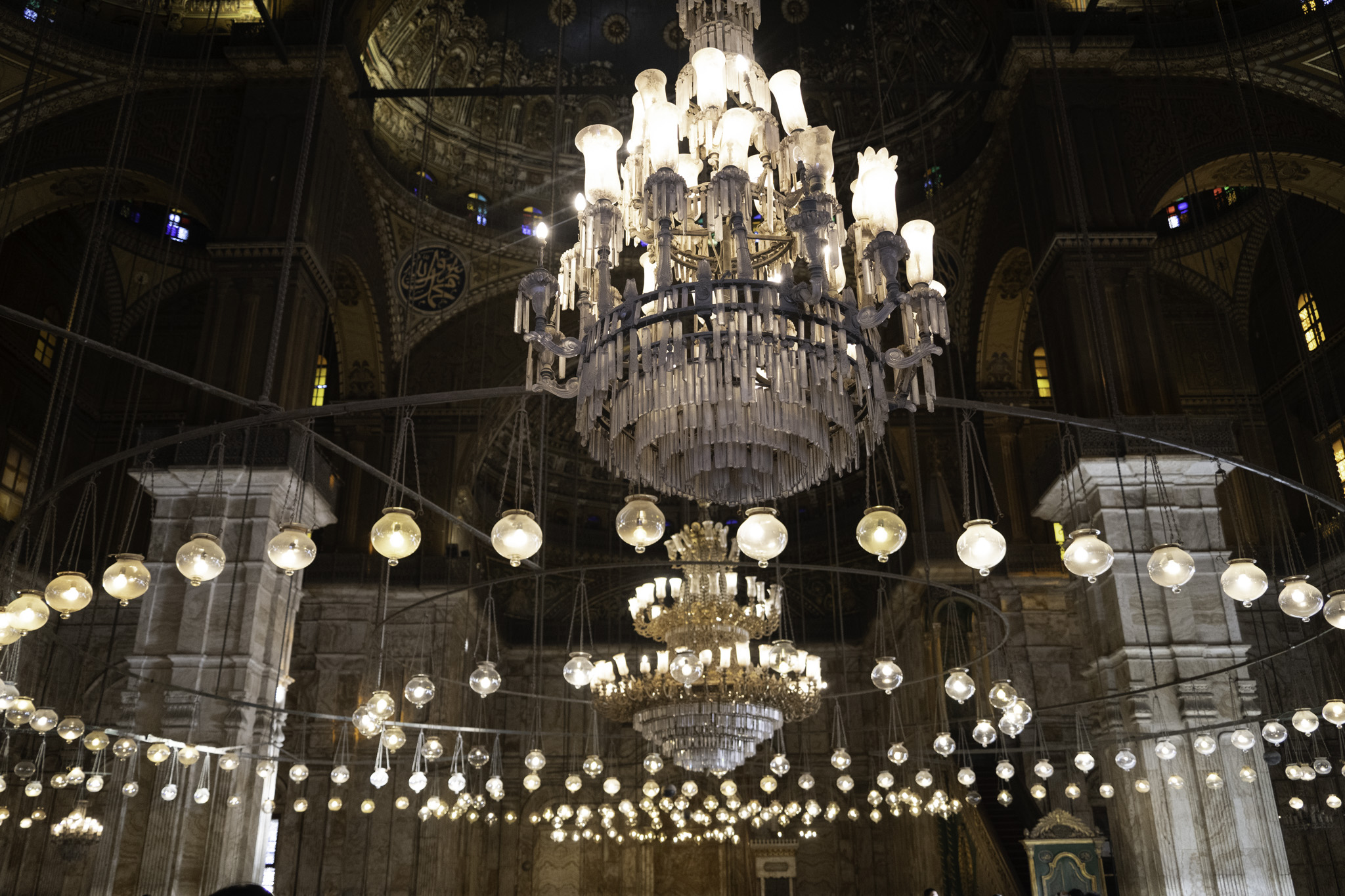
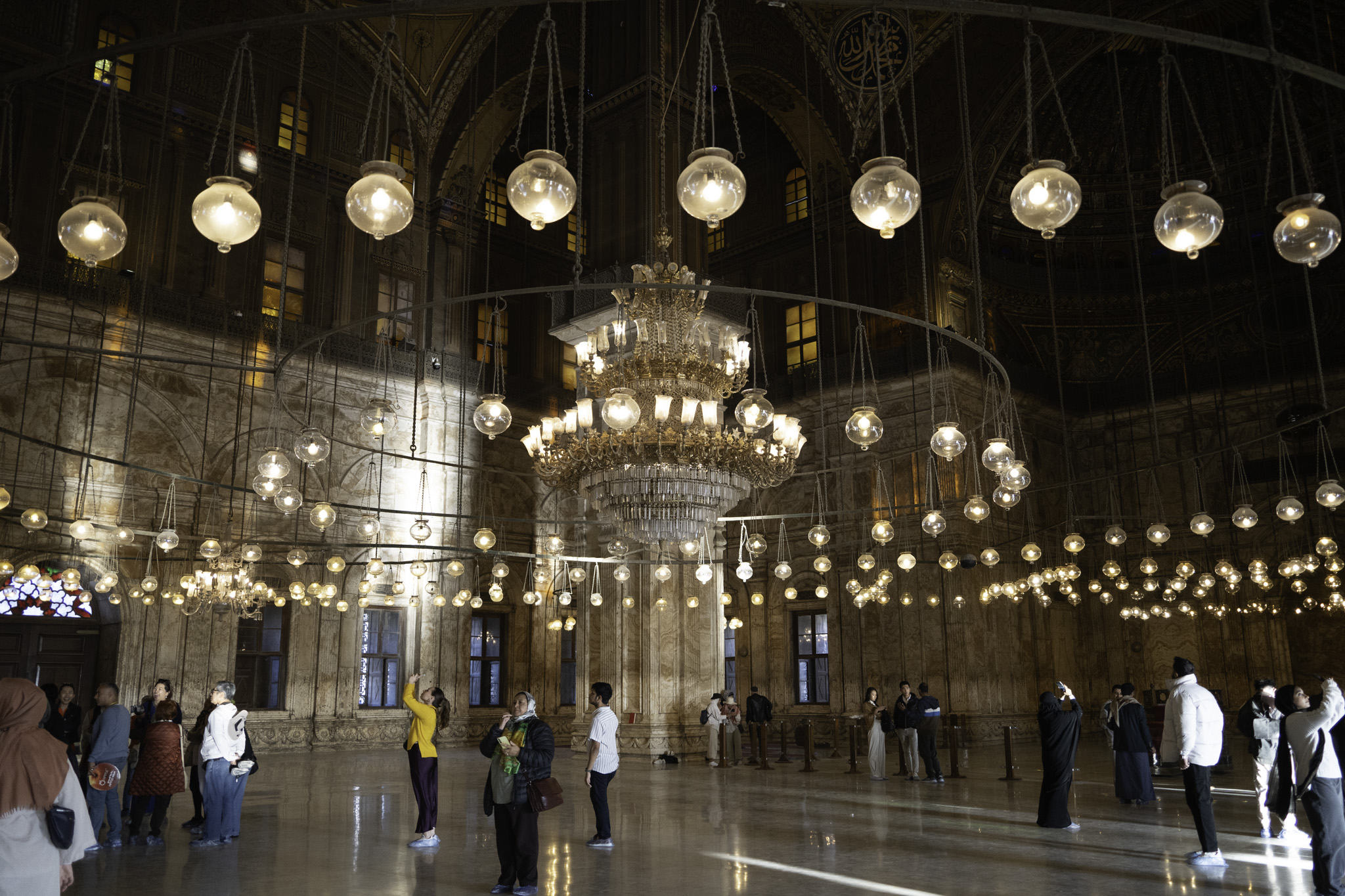
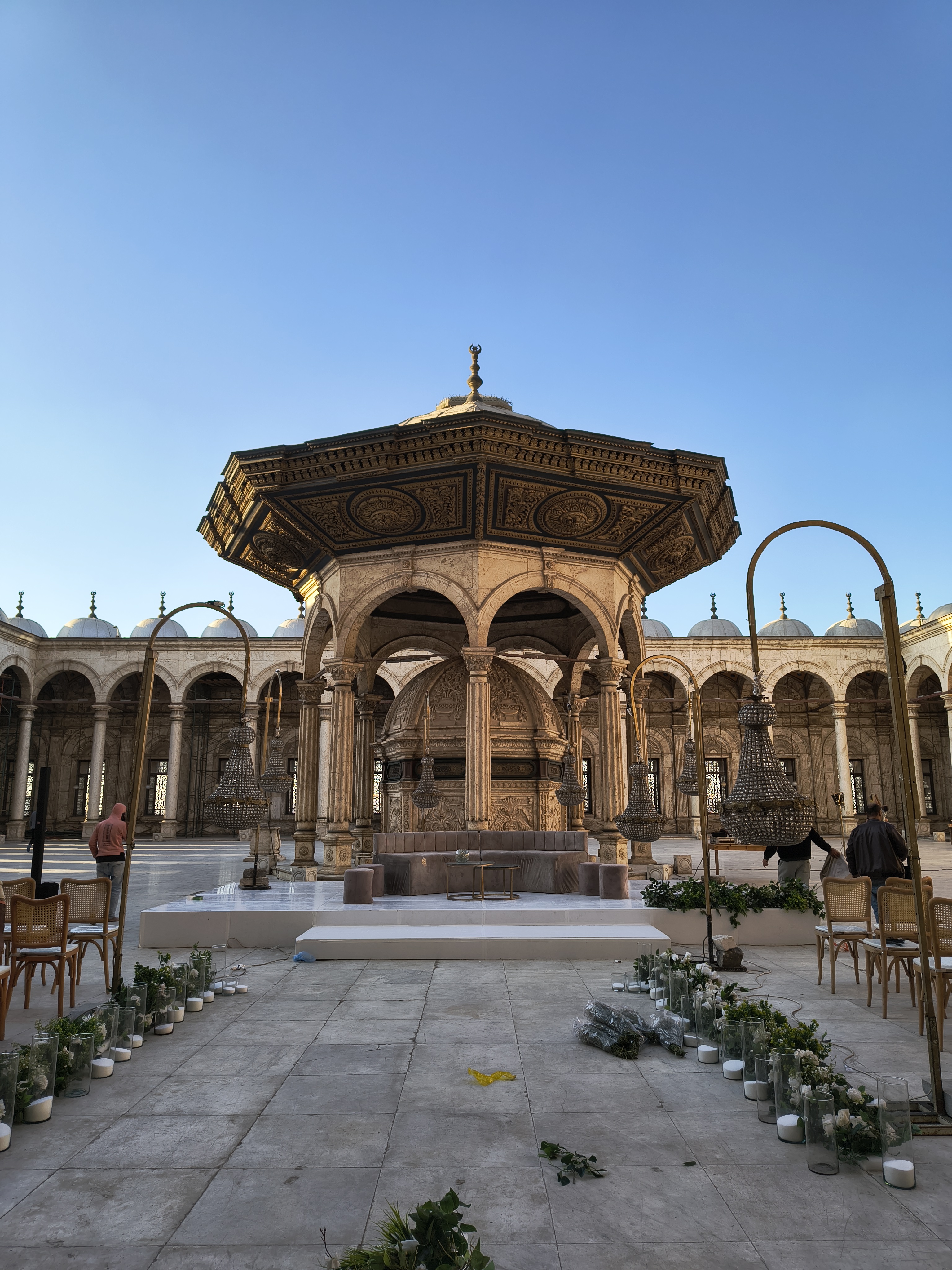
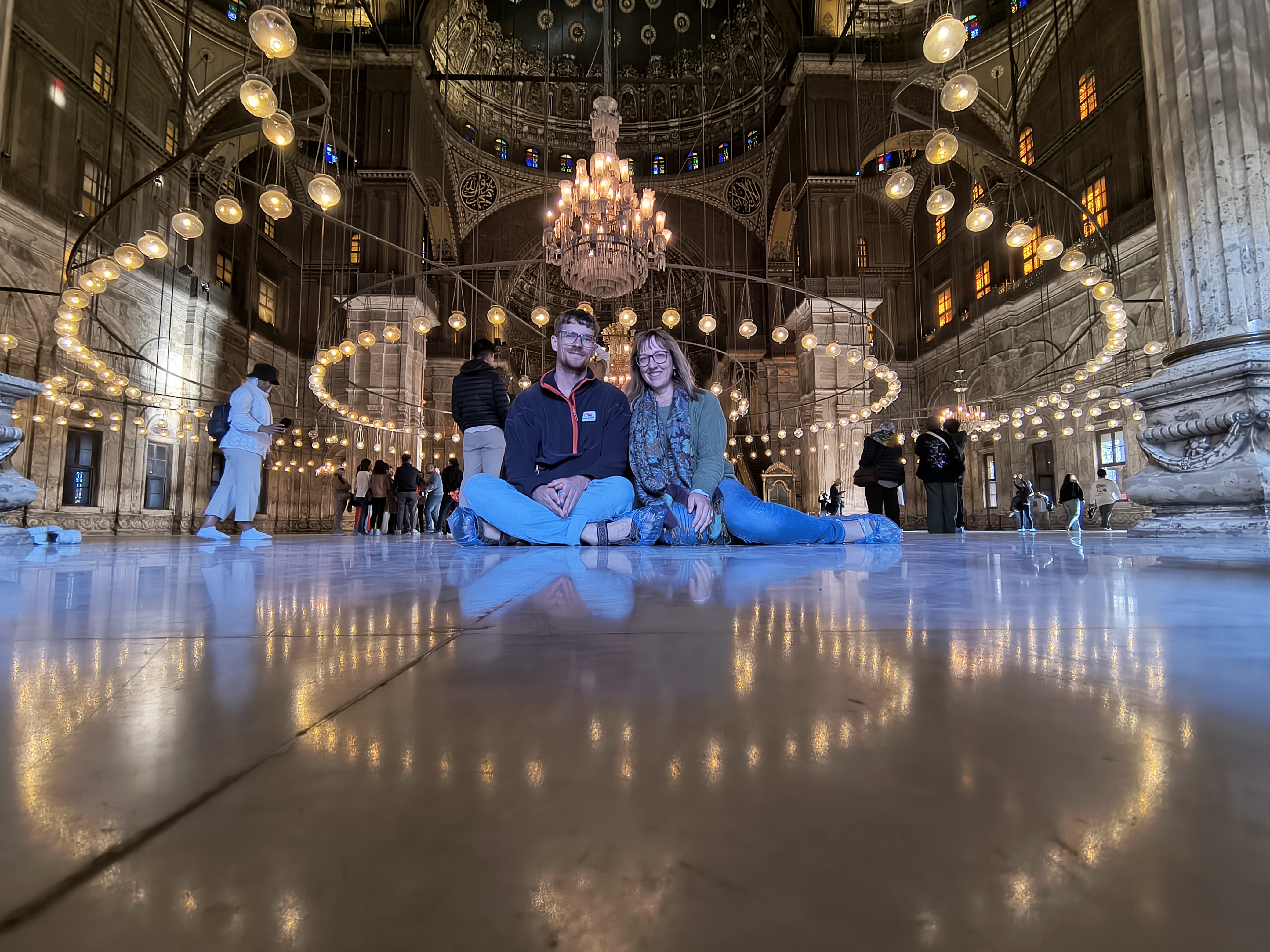
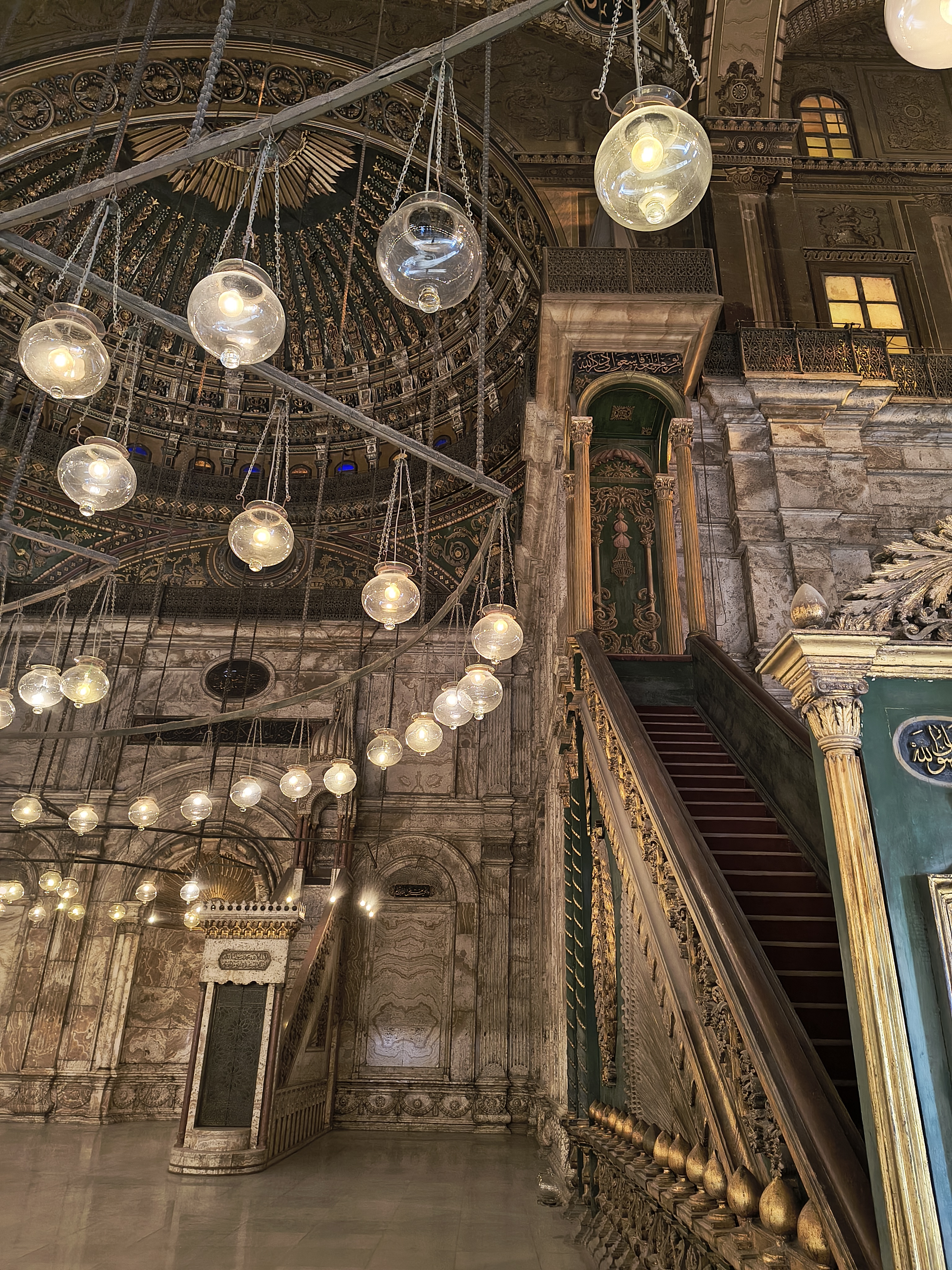
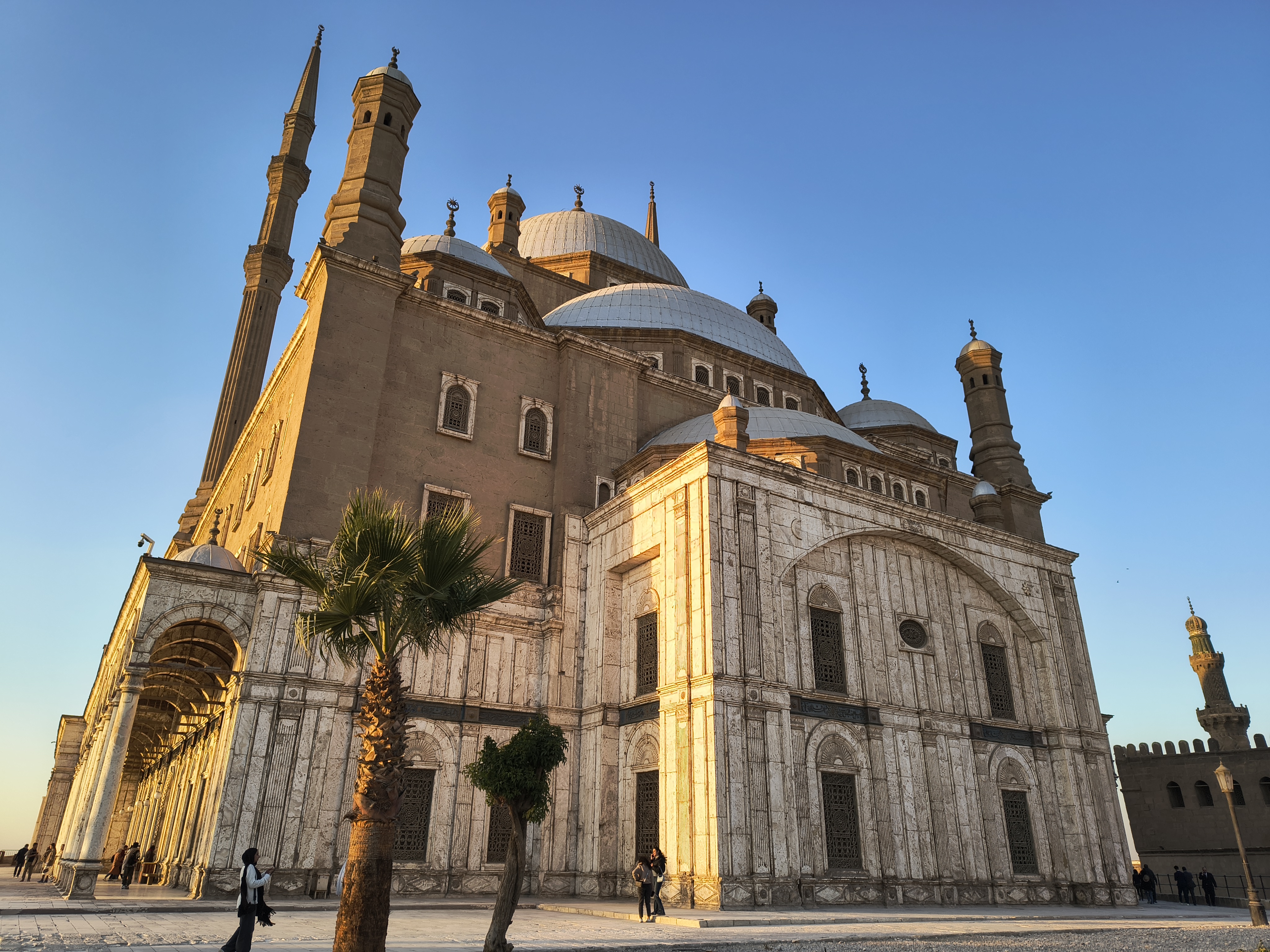
We moved on to the final stop: The Mosque of Muhammed Ali, which was the grandest and most impressive of all three. It was built from 1832-1857 and has a tall center with many intricate designs and important symbols. It is sometimes called the Alabaster Mosque because of the usage of alabaster on the walls. We found it very beautiful and were also treated to Mahmoud’s singing voice as he demonstrated the superior acoustics of the prayer hall (like the sanctuary of a church).
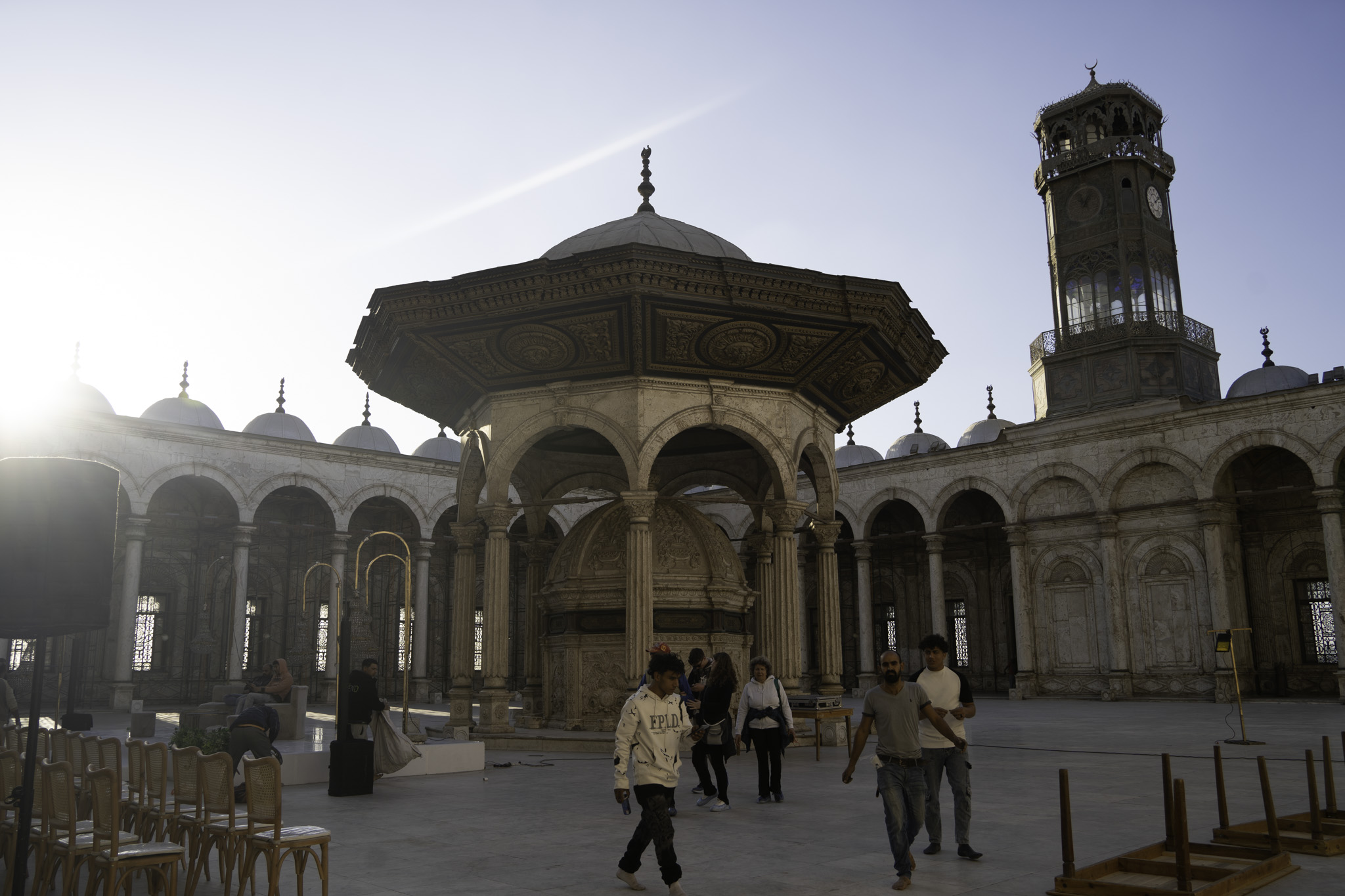
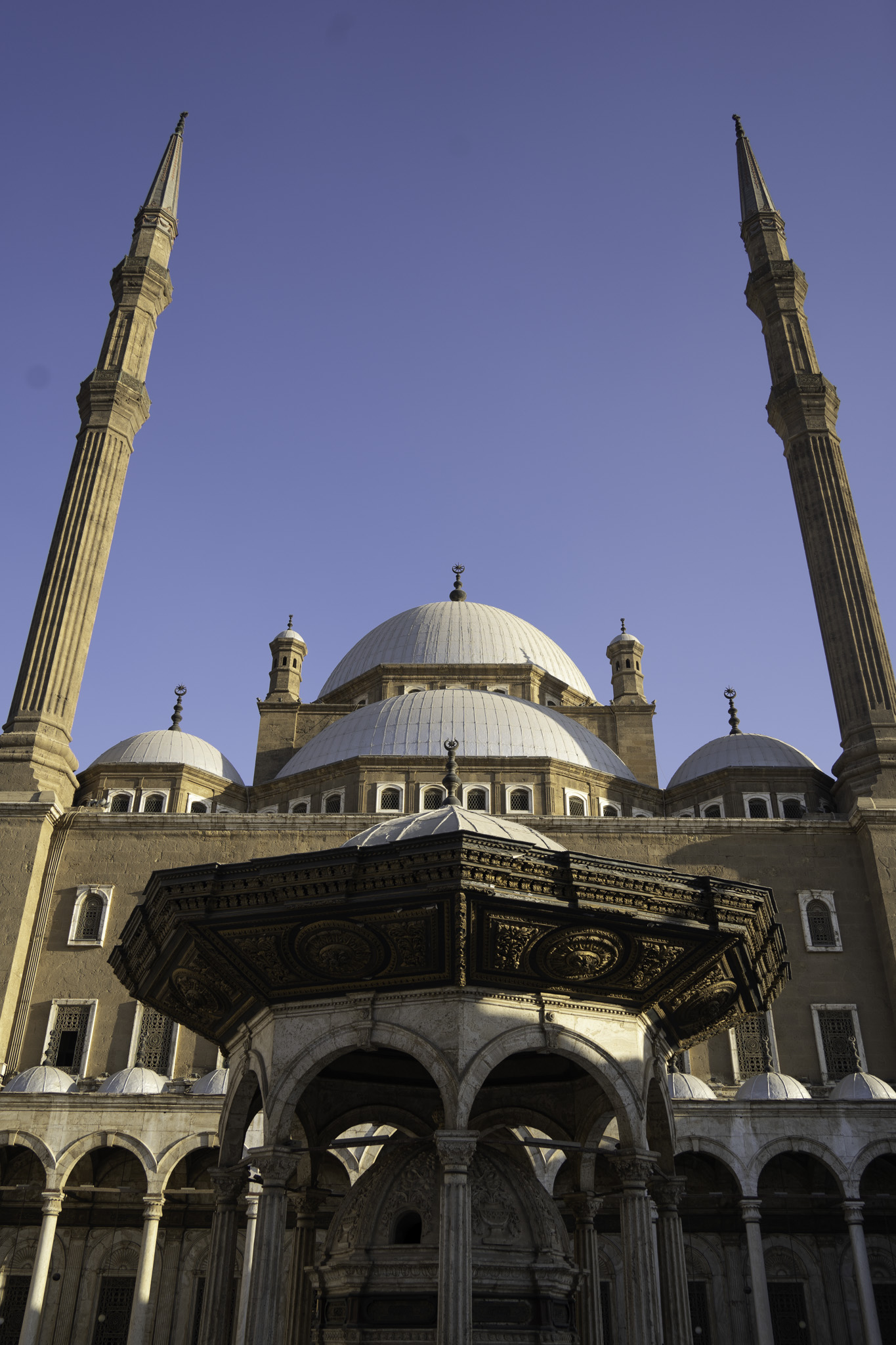
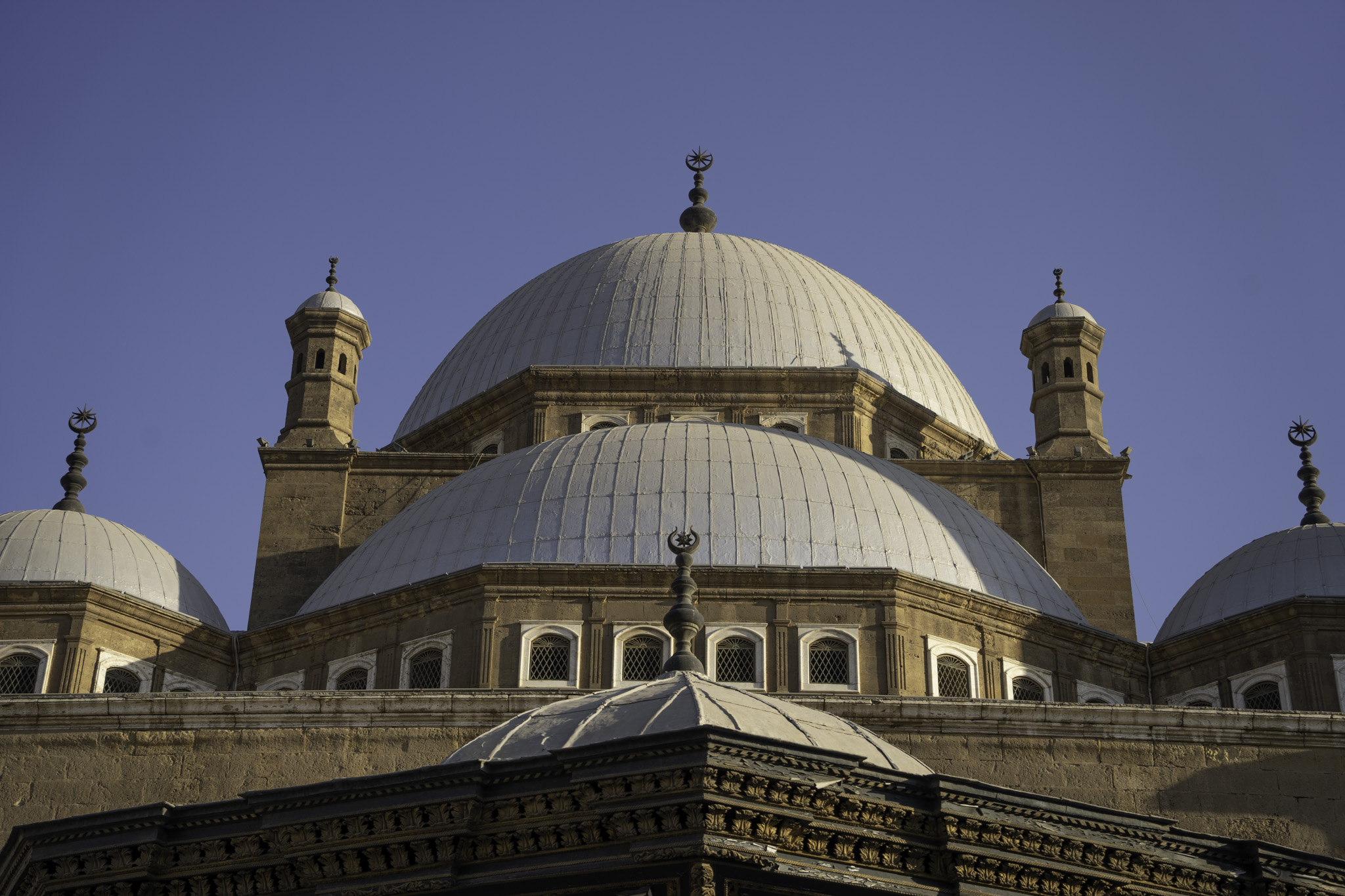
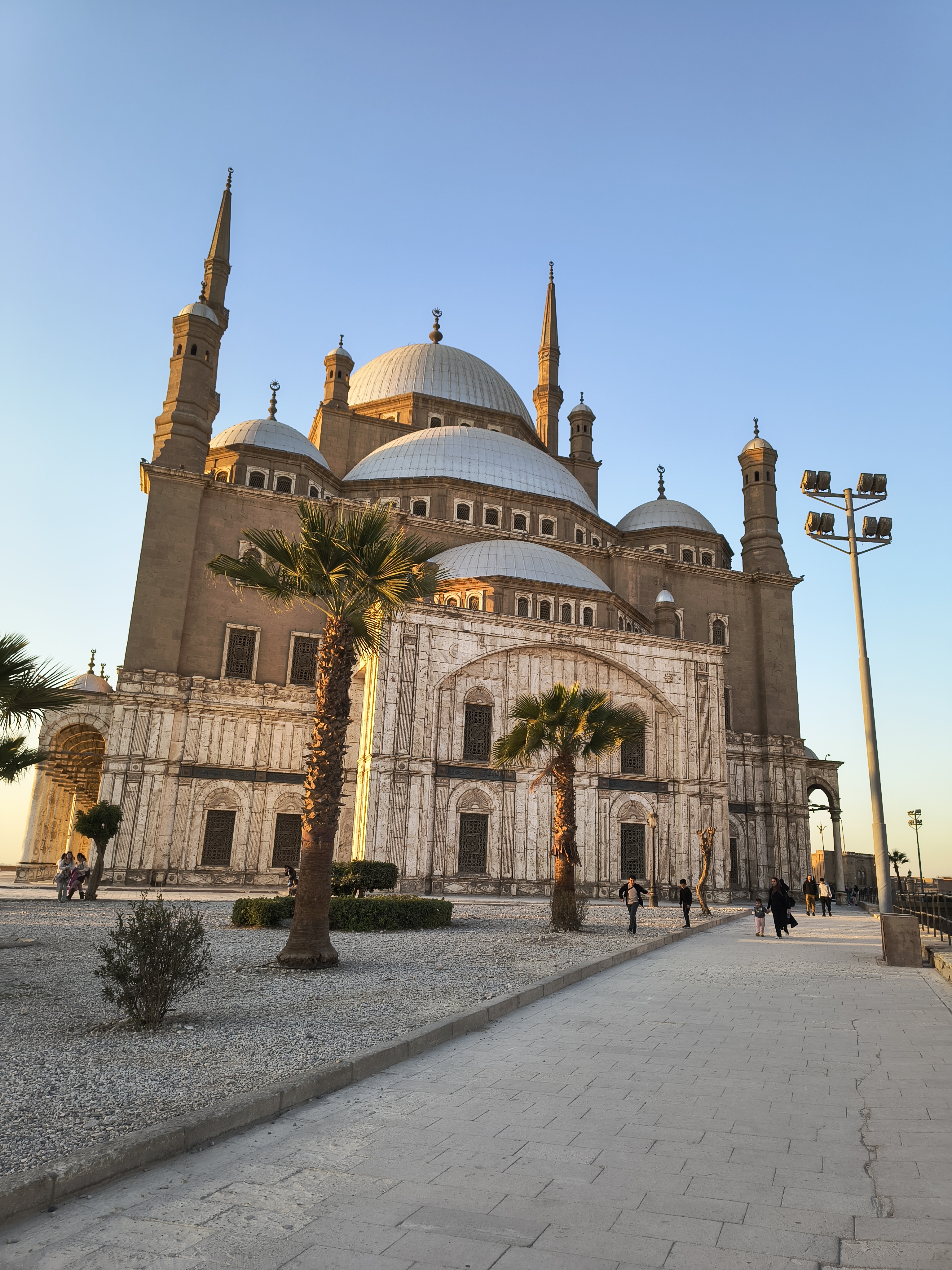
We ended our tour outside looking over Cairo. Mahmoud bid his farewell and we spent the next half hour enjoying the views and resting.
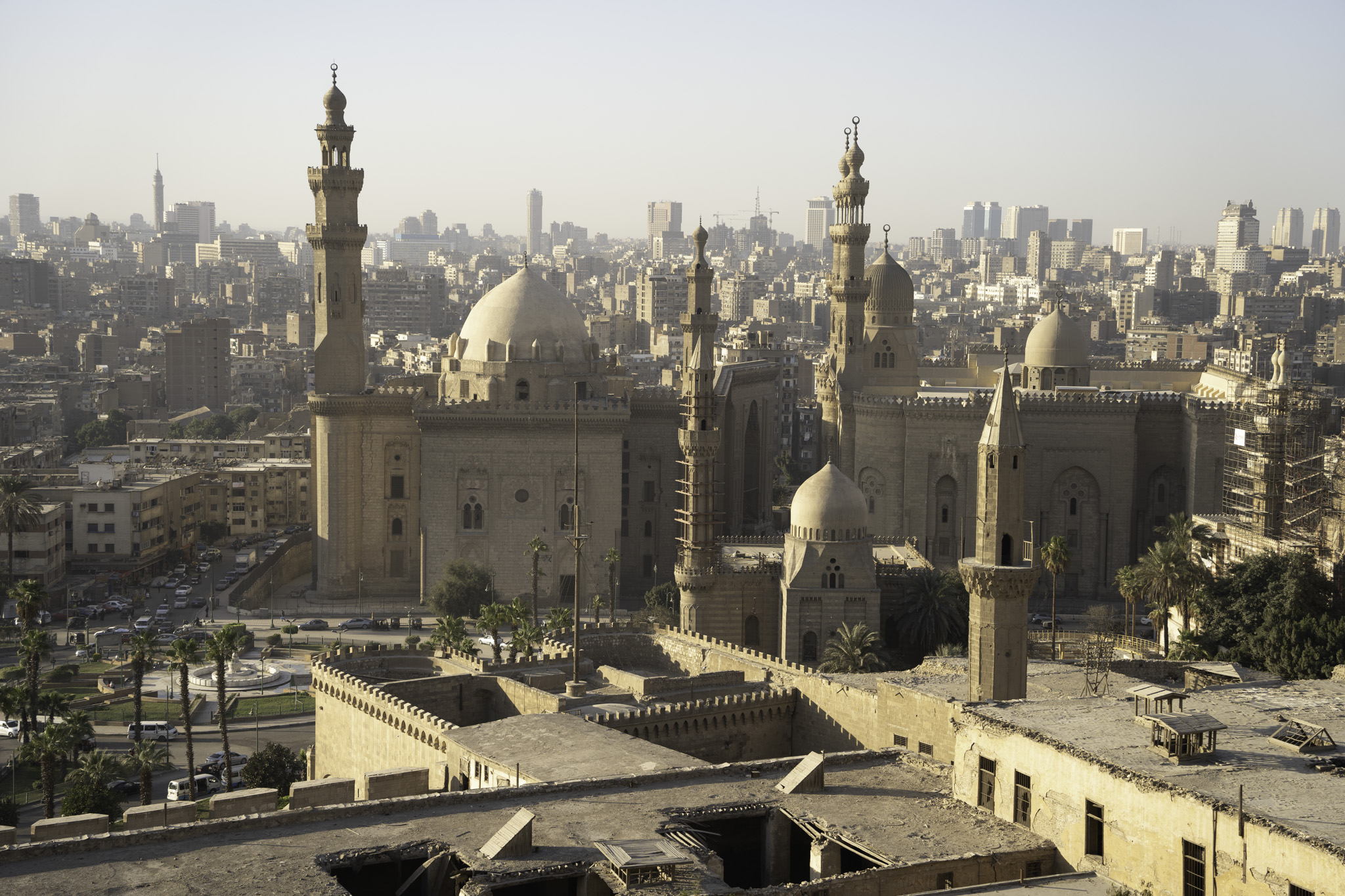
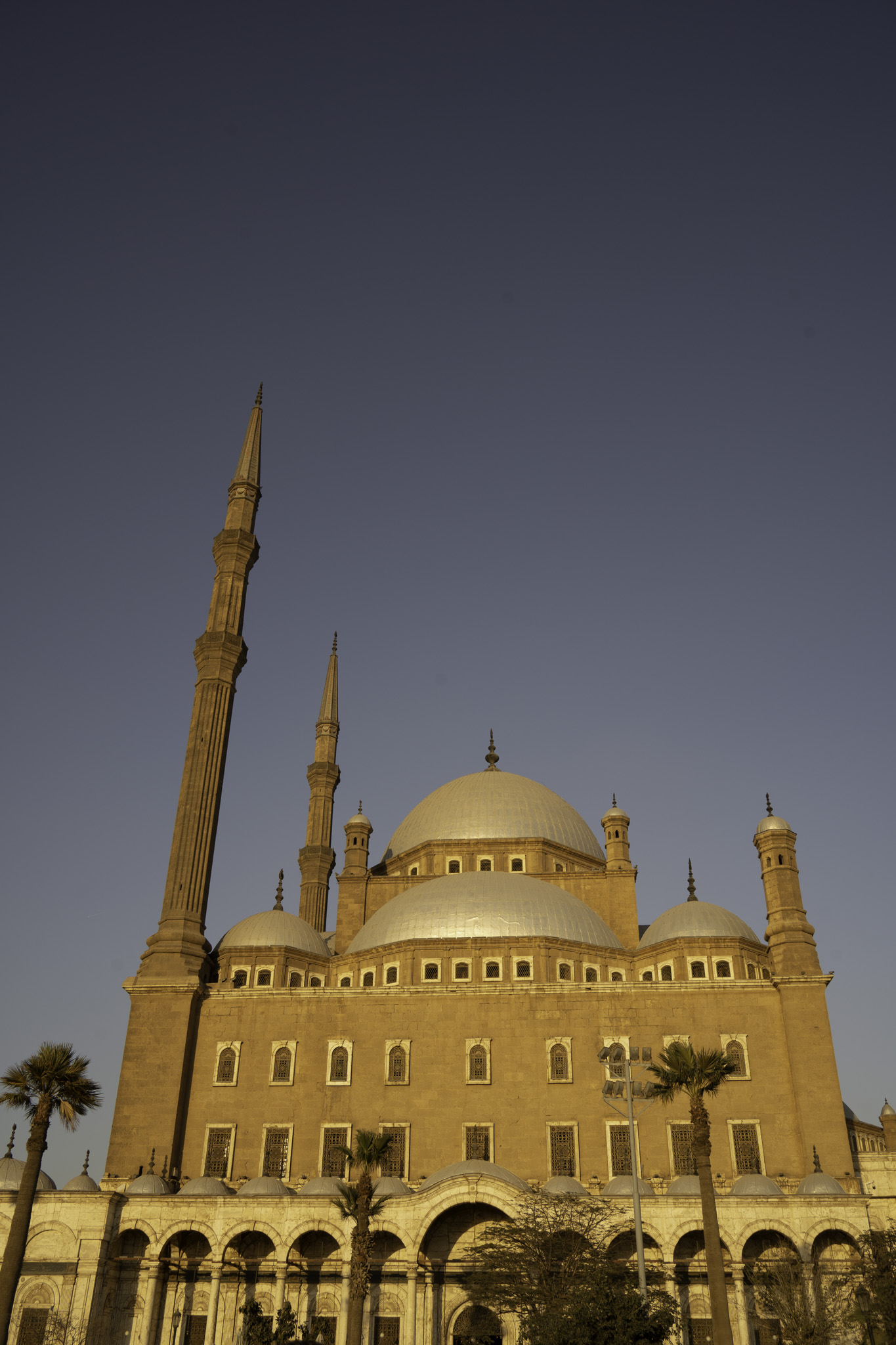
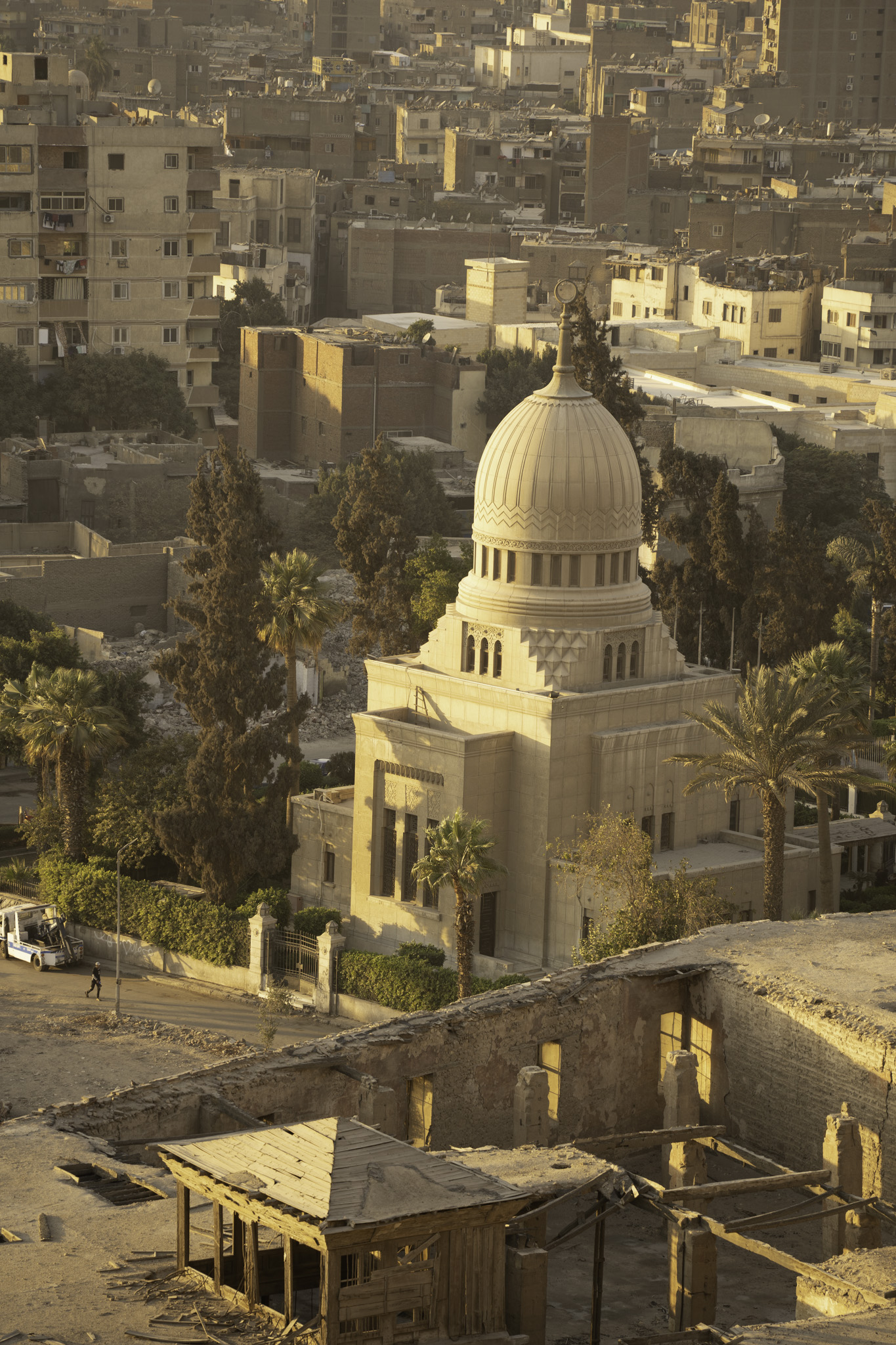
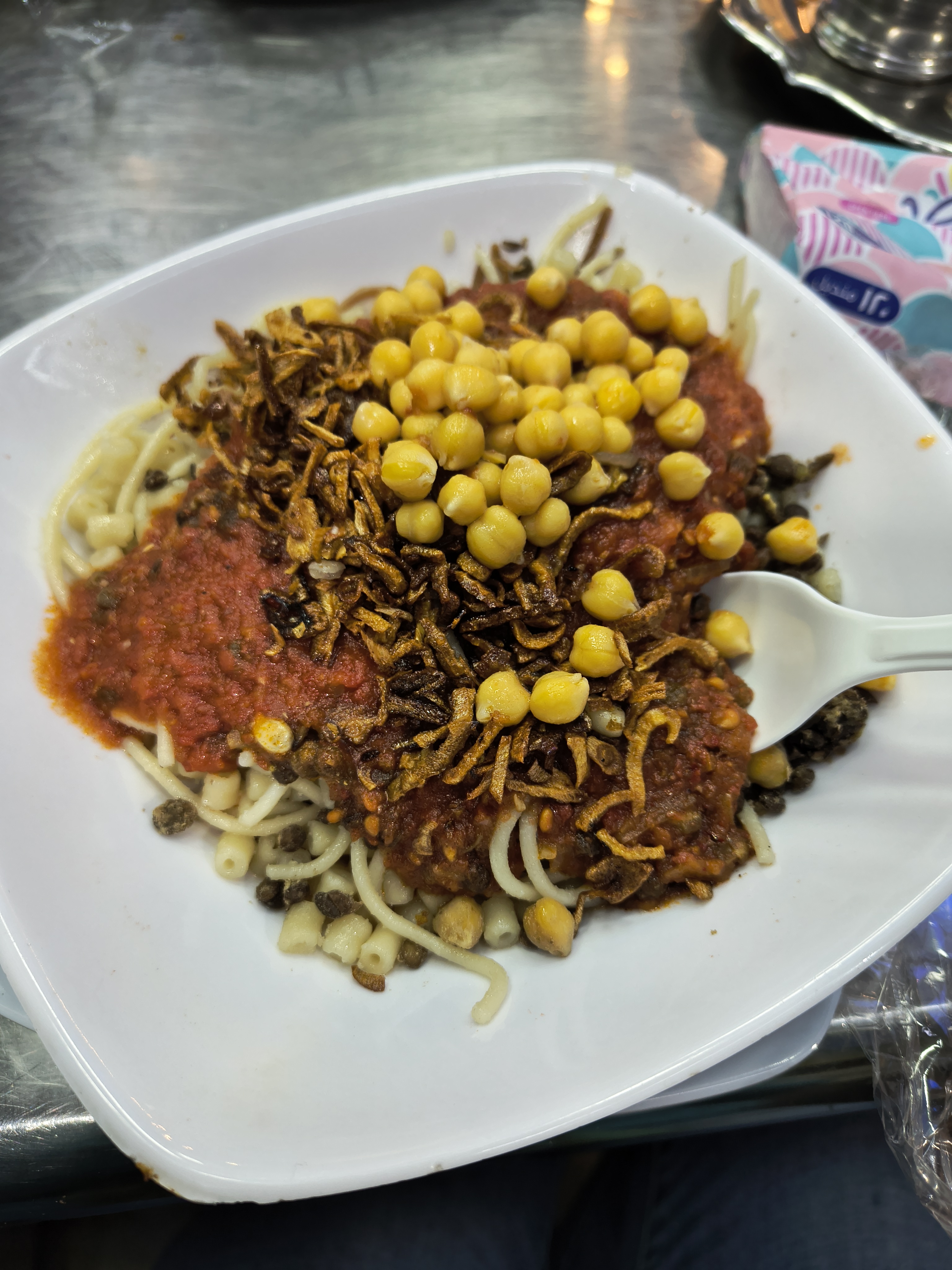
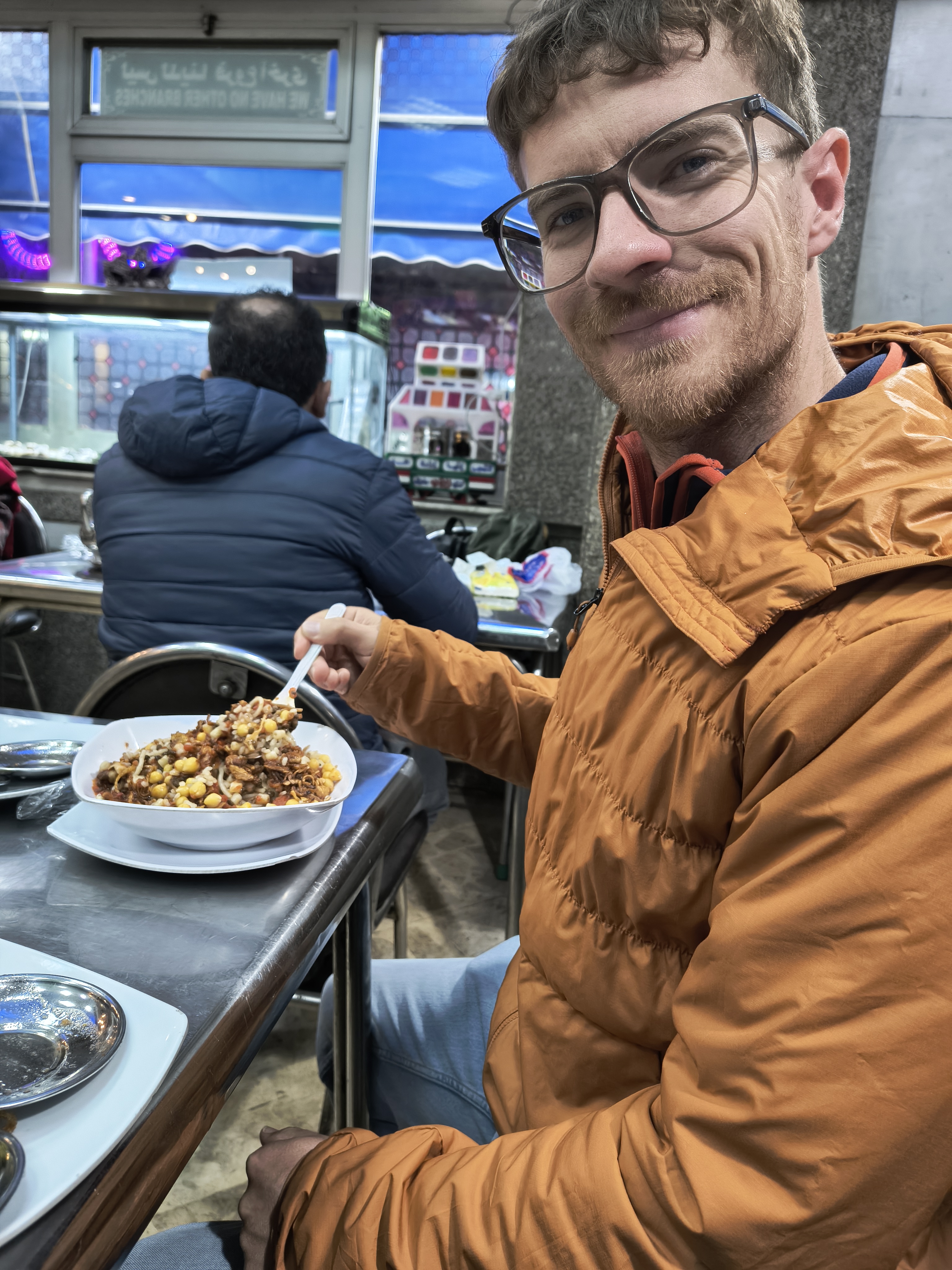
We made a plan to eat Koshary for dinner, which is the national dish loved by Egyptians. We found an Uber and headed to the best place to eat it: Abou Tarek. Funnily enough, this particular restaurant suggestion (made by Mahmoud, our guide) is the same place Callum visited as a backpacker thirteen years ago!
We were shown to seats at a table with a man already sitting at it. This place was pumping and full of people—locals and tourists alike. People were sat with strangers in order to get bums in seats and meals on tables as quickly as possible—no private dining here! We got our food promptly and I dug right in. Koshary consists of pasta, fried rice, vermicelli and brown lentils. It is topped with chickpeas, garlic tomato sauce, and crispy friend onions. Garlic vinegar and hot sauce are optional, but we had the server mix our meals for us, showing how to do it and putting a little of everything in. It was actually very delicious and filling. I couldn’t finish my bowl. We paid and vacated our table, which was immediately taken by a family of four who had been waiting for it.
Such a nice and typical travel day was followed by a terrible drive ‘home’ to Giza and our little hotel room. We were stuck in traffic for an hour and a half with the worst Uber driver we could have possibly found. He was distracted by his phone, kept missing turns, waited ten minutes to turn down a one-way street going the wrong way, played loud Egyptian rap music, and yelled at people from his window, causing problems. The ride would have been bad anyway because of the CRAZY Cairo traffic…but it was made much worse by this guy. We were so tired when we got back. We gave him an honest but negative review online once we were safe and sound in our bed. Thankfully, this was the only truly negative experience we had with an Egyptian. All the rest were lovely.
What a unique Christmas Eve that was!
 Travel Bugs
Wow! Amazing! What a treat that your tour guide sang for you! You have seen some beautiful sites and taken gorgeous photos! I’ve been lucky and spotted some cats on my travels so far too!😉
LikeLike
I’m absolutely loving your Facebook posts and your Blog, Rachel. I don’t know how you have the time to write them and upload all the wonderful photos. You are doing such a great job.
LikeLike